Link Building for Cybersecurity Companies
Cybersecurity has a demanding, technical audience and an active research community.
Cybersecurity has a demanding, technical audience and an active research community. Links follow original research, practical guidance and credibility — not marketing claims.
Why cybersecurity companies link building is different
Security professionals are trained to be sceptical of vendor content, and rightly so: most of it is thinly disguised advertising. The vendors that earn links from security researchers, journalists and IT communities are the ones that publish something genuinely useful or technically credible before they publish anything promotional. Reputation compounds slowly in this space, but it compounds hard once it’s established. That means the first year of a security content programme often looks like a poor return on effort: a handful of pieces, modest pickup, no dramatic spike in links. The payoff shows up later, when journalists and researchers start reaching out first, which is the point at which link building effectively becomes inbound rather than outbound.
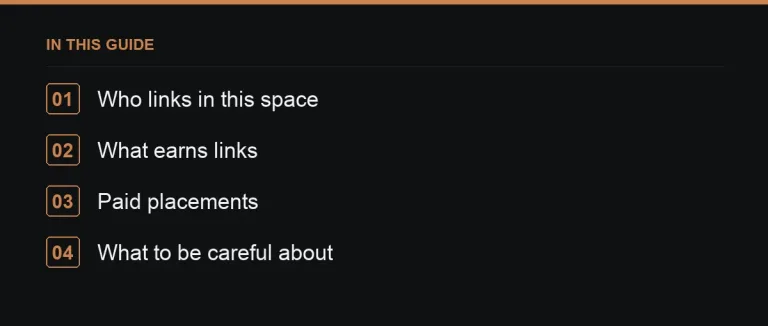
Who links in this space
- Security news and research publications
- Developer and IT communities
- Business and tech media covering breaches
- Conferences and research communities
- Open-source project maintainers who reference tools
What earns links
- Threat research — original analysis of threats, published with technical detail; widely cited when credible and reproducible.
- Practical guides — hardening checklists and incident response steps for small businesses without dedicated security teams.
- Free tools — scanners, checkers and open-source utilities that solve a real, narrow problem (free tools).
- Reactive commentary — expert explanation of major breaches, offered quickly and without exaggeration (reactive PR).
- Talks — conference presentations with published slides and write-ups (events).
A worked example
A security vendor’s research team finds a new phishing pattern targeting a specific industry, writes it up with indicators of compromise and screenshots, and publishes it under a named researcher rather than the company brand. Security news sites cite the original write-up because it’s specific and checkable; the vendor then offers the same researcher for follow-up interviews, extending the story’s reach without any additional outreach cost.
Common mistakes
The biggest mistake is publishing “threat reports” that are really rebranded marketing decks with no verifiable detail — the security community spots this instantly and it damages credibility rather than building it. A second is exaggerating the severity of a finding to get more coverage, which works once and then costs trust permanently. A third is publishing research anonymously as “the company,” when a named researcher earns far more citations and follow-up interest.
Measuring what’s working
Watch which specific pieces of research or tools get organic backlinks and citations over time, not just initial launch-day coverage (monitoring links), and compare your referring domains against direct competitors publishing in the same space (competitor backlink analysis). A useful discipline is reviewing every inbound journalist enquiry after the fact and asking which earlier piece of research or which named researcher prompted it — over a year, that pattern usually points clearly at which format of content is worth doubling down on and which was a one-off.
Paid placements that fit the niche
The technology and internet niches carry relevant IT audiences; prefer sites with genuine technical content over general tech blogs. A quick way to test relevance before pitching is checking whether the site’s recent archive includes anything genuinely technical, rather than relying on its stated category, since many general tech sites publish almost entirely consumer gadget content. Vet every site for relevance, real traffic from your market and editorial quality (evaluation checklist), and keep anchors natural and varied (anchor text strategy) rather than repeating the same commercial phrase on every placement.
What to be careful about
Avoid fear-driven claims and overstating threats; security audiences are sceptical, and credibility is the whole asset. Follow responsible disclosure practices in any research, and never name affected organisations without permission. It’s also worth having a short internal policy on how quickly the team will comment on a live incident and what it will and won’t speculate about before official details are confirmed; a fast, careful, clearly caveated comment tends to earn more journalist trust over time than a slower, more polished statement released after the story has already moved on.
Where to go next
Pick one narrow, technical angle your team can genuinely back up with evidence, publish it under a named researcher, and build outreach around that single piece before scaling to a research programme. Give that first piece real time rather than squeezing it into a spare afternoon; a thin, rushed writeup does more damage to a security team’s credibility than simply publishing nothing that month. Ask a colleague outside the research team to read it before it goes out and flag anything that reads as exaggerated. Compare shortlisted publishers side by side before you commit budget (compare tool), and browse https://successtoroad.com/marketplace/ once you know which niches and price bands fit your plan.
Frequently asked questions
What earns links for cybersecurity companies?
Original threat research, practical guides, free tools and expert breach commentary — always with verifiable technical detail.
Is breach commentary appropriate?
Yes, if it's accurate, helpful and respectful of those affected, and offered quickly rather than days after the story breaks.
Should research be published under the company or a named researcher?
A named researcher typically earns more citations and follow-up interest than an anonymous company byline.
How technical does content need to be to earn links?
Specific and checkable beats broad and promotional — indicators, methodology and reproducible detail matter more than polish.
Put it into practice
Filter 54,483 websites by DR, traffic, niche and price, and order with escrow — you pay only after the link is live.
Browse the marketplace