Wikipedia and Link Building: What You Should Know
Adding your link to Wikipedia usually gets reverted within hours. Becoming a source Wikipedia editors cite is different.
Wikipedia is one of the most visited sites in the world, and marketers regularly try to add links to it in the hope of a quick authority boost. It rarely works, gets reverted within hours in most cases, and isn’t worth attempting as a direct tactic. Understanding why — and what actually makes a site citable on Wikipedia — is far more useful than trying to force an edit through.
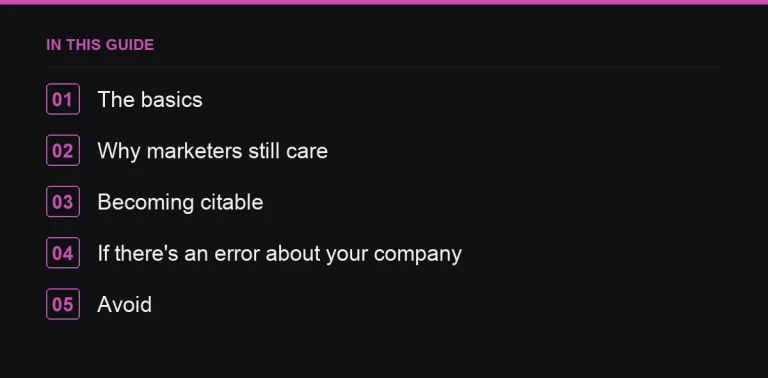
The basics you need to know
- External links on Wikipedia are nofollow, so they don’t pass ranking value directly, whatever anyone tells you about “.org authority.”
- Wikipedia has strict conflict-of-interest guidelines: editing articles about your own company, or adding links to your own site anywhere on the platform, is explicitly discouraged and often against the rules a given article’s editors enforce.
- Volunteer editors actively watch for promotional edits, and pages related to companies and products are patrolled particularly closely — a link added by an account with no other edit history gets noticed almost immediately.
Why marketers keep trying anyway
The interest is understandable. Wikipedia citations bring some referral traffic, and — more importantly for link building — pages cited on Wikipedia are frequently found by journalists and writers doing their own research, who then cite and link to them from their own sites. The value isn’t the Wikipedia link itself; it’s the audience of researchers and writers who use Wikipedia as a jumping-off point and follow its citations to primary sources.
Becoming a citable source
Wikipedia editors cite reliable, independently published sources, and they’re generally happy to add a citation when one genuinely improves an article. You become citable by publishing things actually worth citing, not by asking to be added:
- Original research and data with a clear, stated methodology — see statistics pages that earn citations for how to structure this kind of content.
- Coverage in established, independent publications, which is usually earned through digital PR rather than direct pitching to Wikipedia editors.
- Authoritative reference content with sources listed transparently, covering a topic in more depth than the current cited sources do.
Then let independent editors decide whether to cite you. Approaching this backwards — publishing something specifically designed to be inserted into a Wikipedia article — tends to produce weak, promotional content that fails on both fronts: it doesn’t get cited, and it doesn’t perform well anywhere else either.
If there’s an error about your company
Follow Wikipedia’s documented process for conflict-of-interest editors: propose the change on the article’s talk page, citing reliable independent sources for the correction, rather than editing the article directly. This is slower, but it’s the only route that doesn’t risk your correction being reverted along with everything else on the page.
What to avoid entirely
- Paid Wikipedia editing services that promise a page or a guaranteed link — these breach Wikipedia’s policies outright, and the edits they produce are frequently identified and removed, sometimes along with the paying company’s other legitimate edits.
- Creating sockpuppet accounts to push an edit through after a first attempt is reverted — this tends to get an entire IP range or organisation blocked.
- Treating a Wikipedia mention as the goal rather than the coverage that would make one possible.
What a new company page actually needs
If your company is genuinely notable enough for its own Wikipedia article — meaning it has been the subject of substantial independent coverage, not just funding announcements and product listings — the article should generally be created by an independent editor, not by the company itself. The strongest path is to make sure the independent coverage exists first: profiles, investigative pieces, analysis in trade press. Once that coverage is out there, a neutral editor is far more likely to find it worth writing about, and you avoid the conflict-of-interest problems that come with editing your own page directly.
Weighing the effort against the reward
Given the restrictions above, it rarely makes sense to build a strategy specifically around Wikipedia. It’s better understood as a lagging indicator of broader credibility than a channel to actively pursue. Spend the time instead on the underlying work — research, data, and independent coverage — and treat any resulting Wikipedia citation as a welcome side effect rather than a KPI.
A more realistic goal
Instead of targeting Wikipedia directly, focus on becoming the kind of source it already cites: well-documented research, transparent methodology, and coverage from outlets Wikipedia’s own editors already treat as reliable. That’s the same work that also earns links elsewhere, through journalist outreach and linkable assets, so nothing about it is wasted even if a Wikipedia citation never follows.
Where to go next
Pair this with original research on a small budget if you don’t yet have data worth citing, and with reporting on digital PR beyond link counts to track the citations and coverage that actually accumulate. When you need placements while that reputation builds, a marketplace of publisher websites is a transparent alternative to chasing Wikipedia directly.
Frequently asked questions
Do Wikipedia links help SEO?
They're nofollow, so direct ranking value is limited, but they can bring traffic and lead others to cite you.
Can I add my website to Wikipedia?
Adding links to your own site conflicts with Wikipedia's guidelines and is usually reverted.
How do sites get cited on Wikipedia?
By publishing reliable, original, well-sourced material that independent editors choose to cite.
Put it into practice
Filter 54,483 websites by DR, traffic, niche and price, and order with escrow — you pay only after the link is live.
Browse the marketplace