Protecting Your Site’s Rankings While Selling Placements
Your traffic is the asset you're selling. These habits protect it while you monetise it.

Publishers that sell placements are selling access to something specific: an audience, and a site that search engines currently trust. If that trust erodes, traffic falls and so does the value of every future placement you could sell. Protecting rankings isn’t a side concern to monetisation; it is the business, and the habits below are what keep the two working together instead of against each other.
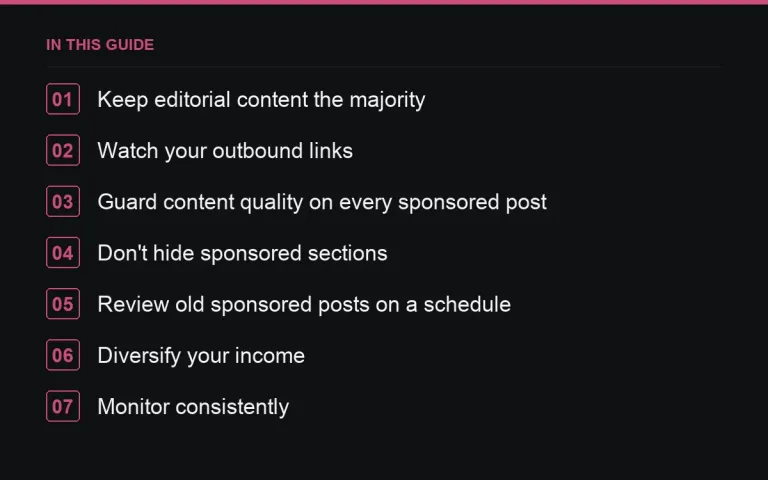
Keep editorial content the majority
Keep publishing your own useful content at a steady pace, regardless of how many sponsored orders come in. A site where most new posts are sponsored stops looking like a publication, both to human readers and to the systems that evaluate a site’s overall quality (selling guest posts responsibly).
Watch your outbound links
- Limit the number of links per sponsored post, and hold the line even for buyers who ask for more.
- Decline high-risk niches that don’t fit your site, no matter the fee.
- Periodically audit outbound links in old posts; remove links to sites that have since become spammy or gone dead.
- Mark sponsored links with the correct attribute (link attributes explained).
Unnatural outbound links from a site is a known trigger for manual review, and it disproportionately affects publishers who sell links without any of the safeguards above (how manual actions relate to link selling).
Guard content quality on every sponsored post
Apply your editorial guidelines to every sponsored post, without exception (writing guidelines buyers respect). Thin, off-topic or inaccurate sponsored articles drag down how your entire site is perceived, not just the page they sit on.
Don’t hide sponsored sections
Tricks like hidden sponsored categories, noindexed sponsored folders presented elsewhere as editorial, or bulk link insertions into old posts might look clever in the short term, but they are exactly the pattern that gets sites flagged. Transparency is both safer and, over a few years, more profitable, because it keeps buyers and search engines comfortable with your site at the same time.
Review old sponsored posts on a schedule
Sponsored posts age. Businesses close, domains change hands, and pages that once linked to a legitimate product turn into something you would never have accepted. Once or twice a year, crawl your sponsored archive and check where each link now points. Remove or update links to dead or repurposed sites, and consider retiring thin sponsored posts that no longer serve readers. It’s also a natural moment to spot any post that fell below your current standards even if it passed your standards at the time.
A simple annual review
| Check | Action if it fails |
|---|---|
| Does the linked page still exist and match its original topic? | Remove or update the link |
| Is the post still relevant to your current audience? | Update, retire, or leave as an archive with no follow links |
| Does the post meet your current quality bar? | Revise if worth keeping live |
| Is the sponsored label still visible and clear? | Re-add disclosure if missing |
Diversify your income
A site that depends entirely on selling placements is under constant pressure to accept orders it shouldn’t. Display advertising, affiliate partnerships that genuinely fit your content, newsletters and your own products all reduce that pressure and let you stay selective on the sponsored side (pricing that reflects selectivity).
Monitor consistently
- Track organic traffic weekly, and investigate sudden drops immediately rather than waiting for a monthly review.
- Check your search console equivalent for manual actions and security issues.
- Note algorithm update dates alongside your own traffic changes, so you can tell the two apart.
Invest in your site
Reinvest part of your sponsored revenue in content, design and site speed. It raises traffic, which raises the value of each placement, which in turn lets you publish fewer sponsored posts at higher prices. That loop, once it’s running, is what makes selling placements sustainable rather than a slow drain on the asset (guest posts versus niche edits).
Signs your current approach needs tightening
A few warning signs are worth acting on before they become a bigger problem. If your ratio of sponsored to editorial posts has crept up gradually over a year without a deliberate decision, that’s worth reversing. If you can no longer say with confidence what every outbound link on your site points to, an audit is overdue. And if you’ve started saying yes to niches or requests you would have declined a year ago simply because revenue was slow, that’s the moment to revisit your guidelines rather than quietly lower your standards.
Treat this as ongoing, not a one-time fix
None of these habits are a single project you complete and move past. Traffic monitoring, link audits and content investment work best as recurring items on a calendar, checked at the same time each quarter or year, rather than something you only think about after a drop in rankings has already happened.
Where to go next
Digital PR lets you decline any order and set your own rules per website through your seller account; see selling guest posts responsibly and writing guidelines for the rest of the picture, or browse the general marketplace to see how other established sites present themselves once these habits are in place.
Frequently asked questions
Can selling guest posts get my site penalised?
Selling paid links that pass ranking value without marking them appropriately can lead to manual actions or devaluation of the links. Careful labelling and consistent standards reduce that risk substantially.
Should I noindex sponsored posts?
It's not required if they're labelled and meet your quality bar. What matters most is transparency and consistent standards, not hiding the pages from search engines.
What should I do if traffic drops?
Check for manual actions or security notices first, compare the timing with known algorithm updates, and review recent sponsored content for quality issues before assuming the cause.
How often should I audit old sponsored posts?
Once or twice a year is usually enough to catch dead links, repurposed domains and posts that have fallen below your current standards.
Put it into practice
Filter 54,483 websites by DR, traffic, niche and price, and order with escrow — you pay only after the link is live.
Browse the marketplace