Using Order Messaging Effectively as a Publisher
Order messaging is not just a communication channel; used well, it is also your best record when a dispute arises.

Order messaging inside a marketplace often gets treated as a lightweight chat channel, when it is actually the single clearest record you have of what was agreed for any given order. Publishers who use it deliberately — not just reactively — resolve disputes faster and avoid a fair number of them entirely.
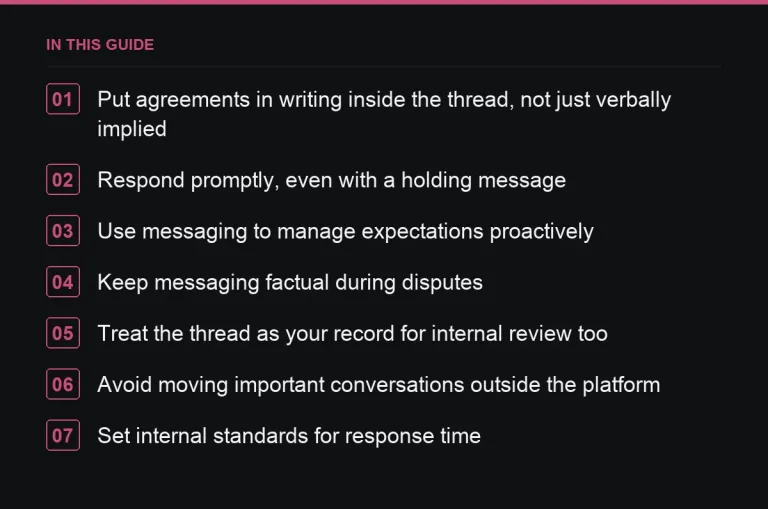
Put agreements in writing inside the thread, not just verbally implied
If a scope detail, turnaround estimate, or revision limit gets discussed, restate it explicitly in the order message thread even if it was first mentioned elsewhere. A clear written summary — “confirming: 800-word post on X, one revision round included, expected within five business days” — gives both sides an unambiguous reference point later.
Respond promptly, even with a holding message
A buyer waiting days for any response, even to a simple question, starts to worry regardless of whether your actual turnaround for the deliverable itself is on track. A quick “received, reviewing now, full response by [date]” costs almost nothing and prevents a buyer’s anxiety from turning into a premature dispute or a negative review.
Use messaging to manage expectations proactively
Don’t wait for a buyer to ask about status. If you know a specific order will run past your normal https://successtoroad.com/blog/setting-turnaround-expectations/, message them before they follow up. This single habit prevents a large share of the frustration that shows up later in reviews (see https://successtoroad.com/blog/responding-to-reviews/).
Keep messaging factual during disputes
If a dispute arises — over a link change, a removal request, or a refund — keep your messages focused on facts and agreed terms rather than becoming defensive or personal. Reference the specific terms from earlier in the same thread rather than relitigating the whole relationship. This tone is easier to maintain if the thread already contains clear, written agreements from earlier stages.
- Restate key agreements explicitly in writing, even if discussed elsewhere first
- Respond quickly, even briefly, rather than leaving messages unanswered for days
- Flag delays proactively rather than waiting for the buyer to ask
- Keep dispute-related messages factual and reference agreed terms directly
Treat the thread as your record for internal review too
Beyond managing the buyer relationship, a well-documented order thread is useful internally — for training a new editor on how a specific type of order was handled, or for identifying patterns across multiple disputes tracing back to the same root cause, as discussed in https://successtoroad.com/blog/the-order-lifecycle-from-the-publishers-side/.
Avoid moving important conversations outside the platform
It can be tempting to move to email or another channel for a longer conversation, but this fragments your record and can also work against you if a marketplace dispute resolution process later needs to see the full communication history. Keep substantive conversation inside the order thread wherever the platform supports it.
Set internal standards for response time
Just as you have a stated turnaround for the deliverable itself, set an internal target for how quickly you respond to any order message, separate from the actual work. Consistency here is a large part of what buyers actually experience as “good service,” often more than the speed of the deliverable itself.
Use messaging history to inform future orders from the same buyer
A returning buyer placing a second or third order through https://successtoroad.com/marketplace/ benefits from you referencing what worked well or caused friction in their earlier order thread, rather than starting the relationship from zero each time. This small continuity signals attentiveness and tends to make repeat buyers more forgiving of minor issues than a first-time buyer would be.
Keep messages concise even when being thorough
Thorough does not mean long. A message that covers everything necessary in a few clear paragraphs is more likely to be fully read than one that buries the important points in a long, unstructured block of text. Use short paragraphs and, where useful, a simple list, so a buyer scanning quickly on a phone still catches the key detail.
Review messaging habits across your editorial team
If more than one person handles order messaging, periodically compare how differently each person communicates on similar situations. Large gaps in tone or thoroughness between team members are often invisible to any single person but very visible to a buyer who happens to place two orders handled by different editors, and closing that gap is a quiet but meaningful consistency improvement.
Do not let messaging discipline slip during busy periods
The temptation to skip a written confirmation or send a rushed, unclear message is highest exactly when volume is heaviest, which is also when a clear record matters most. Protect your basic messaging habits during busy stretches rather than treating them as the first thing to cut when time is short.
Where to go next
Read https://successtoroad.com/blog/handling-difficult-buyers/ for applying good messaging practice under more strained conversations, and https://successtoroad.com/blog/verifying-buyers-and-avoiding-scams/ for how messaging patterns can also help you spot bad-faith orders early.
Frequently asked questions
Why does it matter if agreements are discussed elsewhere before being restated in order messaging?
A verbal or off-platform agreement is much harder to reference later than a clear written summary inside the order thread, which becomes the primary record if a dispute arises.
How quickly should we respond to order messages?
Set an internal target separate from your deliverable turnaround. Even a brief acknowledgment within a short window prevents a buyer's uncertainty from escalating into a premature dispute.
Should we move a complicated conversation to email instead of the marketplace's messaging?
Generally no. Keeping substantive conversation inside the order thread preserves a complete record, which matters both for your own reference and for any dispute resolution process the marketplace offers.
How does order messaging help with dispute resolution specifically?
A thread containing clearly stated agreements from earlier stages gives you a factual reference point during a dispute, rather than relying on memory or reconstructing what was agreed after the fact.
Put it into practice
Filter 54,483 websites by DR, traffic, niche and price, and order with escrow — you pay only after the link is live.
Browse the marketplace