Link Building for Fashion Brands
Fashion links come from editors, stylists and stories — not from product pages. Here's how apparel brands get featured.
Fashion is visual, trend-driven and heavily covered by editors, stylists and creators. Product pages rarely earn links on their own, however good the imagery. Coverage does: gift roundups, trend features, brand stories and collaborations, all of which need a reason to exist beyond “buy this item”.
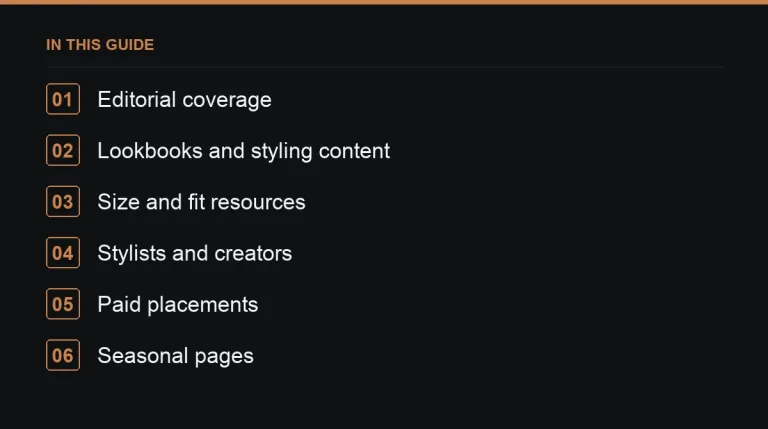
Editorial coverage
- Trend and gift roundups — pitch products with strong images, prices and stock availability, months before the season they’ll appear in.
- Brand stories — founders, craftsmanship, materials, local manufacturing, and anything that gives a writer an actual angle beyond the product itself.
- Sustainability — only with real substance: supply chain detail, certifications, repair or resale schemes. Vague “eco” claims get ignored or, increasingly, actively challenged by readers and editors alike.
Lookbooks and styling content
Styling guides such as “how to wear wide-leg trousers for work”, fit guides and seasonal lookbooks rank for informational searches and give bloggers something concrete to reference rather than just a product photo. Link from them to the relevant categories on your own site (internal linking that supports external links).
Size and fit resources
Detailed, honest size guides with real measurements and fit notes are linked by forums and reduce returns — a rare case where a genuine SEO asset also saves the business money directly, which makes it easy to justify the time spent building it properly.
Stylists and creators
Stylists, personal shoppers and creators feature brands they genuinely like, and gifting product is common practice in the space. Disclosure is required almost everywhere gifting happens, so build it into the arrangement from the start rather than treating it as an afterthought. Choose people whose audience actually matches your customer rather than the largest following you can afford.
Paid placements
The fashion niche is full of sites, and a meaningful share of them are thin lifestyle blogs publishing sponsored posts on almost any topic. Prioritise real fashion publications and blogs with genuinely engaged readers over the ones with the highest metric and the least actual content (red flags to check first). Women’s lifestyle and general lifestyle niches can also fit, depending on your specific audience.
Seasonal pages
Keep evergreen URLs for seasonal collections, such as a permanent “/summer-dresses/” page, rather than creating a new URL each year, so links earned last season keep counting toward this year’s rankings (ecommerce link building).
Working with fashion weeks and industry events
Fashion weeks, trade shows and industry award ceremonies generate a wave of press coverage concentrated into a short window. Smaller and emerging brands can often secure coverage by pitching a specific, narrow angle — a single standout piece, a story about how a collection was made — rather than trying to compete with established houses for broad coverage of the whole event.
Content type by goal
| Goal | Content that fits |
|---|---|
| Seasonal sales spike | Gift and trend roundups pitched months ahead |
| Brand awareness | Founder and craftsmanship stories, stylist partnerships |
| Reduce returns and build trust | Detailed size and fit guides |
| Long-term organic traffic | Evergreen styling and lookbook content |
Working across markets and languages
A fashion brand selling in several markets often finds that a story which resonates with one country’s press falls flat in another, and translating a press release word for word rarely produces the same result as writing a locally relevant angle from scratch. Where budget allows, work with local PR contacts or translators who understand each market’s own fashion media, rather than running one global campaign and hoping it lands everywhere.
Handling influencer gifting logistics
Sending product to a large list of creators without tracking who received what, and when, makes it nearly impossible to measure whether a gifting programme is actually producing coverage or links. Keep a simple log of who was sent product, what they posted, and whether it included a link, so you can tell which relationships are worth continuing and which aren’t producing anything measurable.
Working with fashion press over multiple seasons
A single successful pitch to a fashion editor is worth following up on months later with your next collection, rather than treated as a one-off win. Editors who covered you once and had a good experience — clear information, good images supplied promptly — are far more likely to cover you again without needing to be convinced from scratch each season.
Avoiding common mistakes
The most frequent misstep is pitching a product roundup with weak, inconsistent imagery, since fashion editors judge submissions visually before reading a word of the accompanying copy. A second is treating every fashion-adjacent blog as equally valuable regardless of whether it has a real, current audience — many older fashion blogs have quietly become general sponsored-content sites, so check recent posts before committing to a placement.
Where to go next
Start with one strong brand story or a well-produced size guide, since either gives editors and stylists a genuine reason to feature you beyond the product itself. From there, use the fashion niche marketplace to find publications with real, current fashion coverage, and check how to evaluate a site before committing budget to a placement.
Frequently asked questions
How do small fashion brands get featured in magazines?
Strong images, a clear story, fair prices and early pitches for seasonal and gift features, sent well ahead of the editorial deadline.
Should fashion brands create new URLs for each season?
Keep evergreen category URLs so links and rankings carry over year to year, rather than resetting with every new collection page.
Do sustainability claims help earn links?
Only when backed by specifics such as supply chain detail or certifications. Vague claims are increasingly ignored or criticised by both editors and readers.
Are fashion creator partnerships worth the cost?
When the creator's audience genuinely matches your customer base and disclosure is handled properly, yes. Reach alone, without relevance, rarely converts into real interest.
Put it into practice
Filter 54,483 websites by DR, traffic, niche and price, and order with escrow — you pay only after the link is live.
Browse the marketplace