Link Building for Ecommerce Category and Product Pages
Nobody links to a category page for fun. Here is how stores earn links elsewhere and route the authority to pages that sell.
Ecommerce link building runs into a structural problem before it even starts: the pages that generate revenue — categories and products — are almost never the pages anyone wants to reference. Nobody writes “as this excellent page about men’s running shoes, size 10, in stock, explains…”. The workaround isn’t complicated, but it does require treating content and commerce as separate jobs that feed each other.
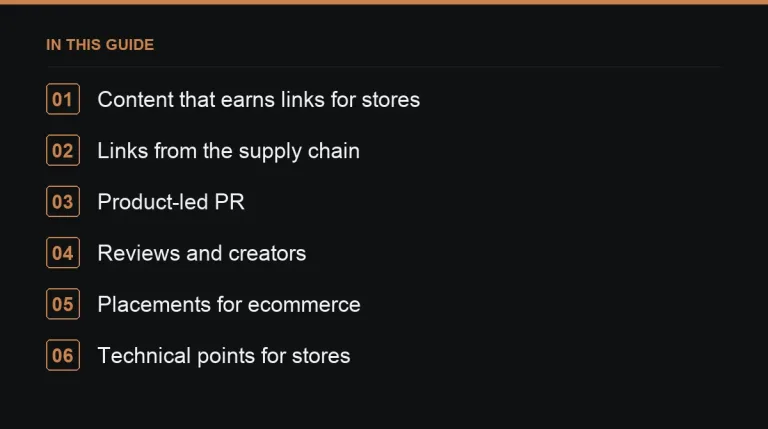
Content that earns links for a store
- Buying guides that read as genuinely independent advice on choosing a product type, not a thinly dressed product list.
- Sizing and fit guides, which forums and bloggers link to constantly because good ones are rare.
- Care and how-to content covering setup, maintenance and troubleshooting.
- Original data drawn from anonymised sales trends — regional colour preferences, seasonal demand shifts, that sort of thing.
Link from each guide to the categories it supports, so the authority these pages earn has somewhere to flow (internal linking that supports backlinks).
Links hiding in your supply chain
Brands you stock frequently maintain “where to buy” or stockist pages that should list you — check and chase these directly rather than assuming they’re automatic. Manufacturers sometimes list retail partners publicly. Payment, shipping and platform providers occasionally feature customer stories that link back. None of this is glamorous, but it’s link building that costs almost nothing beyond an email.
Product-led PR
Gift guides, seasonal roundups and product reviews in relevant publications drive links and direct sales at once. Journalists compile seasonal gift guides months ahead of publication, so pitch with clear pricing, availability and good images well before the season you’re targeting — arriving after the guide is compiled is a wasted pitch regardless of how good the product is.
Working with reviewers and creators
Sending products to relevant reviewers and creators can earn genuine coverage, but disclosure rules apply: gifted and paid content needs to be labelled as such, and links from sponsored reviews should carry the appropriate attribute rather than passing as an organic endorsement (sponsored tags and rel attributes).
Guest posts and niche placements
Guest content works for stores when it supports buying guides on relevant lifestyle, hobby or category-specific sites rather than linking straight to product URLs. Look for publishers that match what you sell — fashion, home and family and e-commerce are natural starting points on the marketplace.
Technical housekeeping that protects the links you earn
| Issue | Fix |
|---|---|
| Filter and sort parameters creating thousands of near-duplicate URLs | Keep category URLs stable and canonical |
| Discontinued products with existing links | Redirect to the closest matching category, not a generic homepage |
| Links pointing at filtered or sorted variants | Point outreach and internal links at the canonical URL only |
See the technical SEO checklist to run before link building for the full list.
Affiliate and comparison sites as a link source
Product comparison and “best of” sites in your category are a realistic link source that many stores overlook because they associate them purely with affiliate revenue rather than SEO value. A well-run comparison site with genuine traffic will often link to your buying guide or category page as a supporting reference even outside of any affiliate arrangement, provided the content is actually useful rather than a thin product feed. Building a relationship with a handful of these sites — sending them accurate, current product and pricing information rather than making them scrape it — tends to produce both the affiliate relationship and organic editorial links over time.
Marketplace and platform partners can help too. If you sell through a wider platform, check whether it maintains a directory of featured or notable sellers, and whether your store profile there links back to your own domain. These listings are usually free to claim and easy to forget about once set up.
It’s worth building a short list of the comparison and roundup sites that matter most in your category and checking it quarterly, the same way you’d check a supplier relationship. Sites drop out of relevance, new ones appear, and a list that was accurate a year ago can be stale without anyone noticing until a competitor turns up in the same roundups you used to appear in.
Seasonal planning for retail-specific press
Beyond gift guides, retail press works to a calendar most stores under-use: back-to-school in mid-summer, “best deals” roundups ahead of major sale events, and post-holiday returns or resolution-themed content in January. Each of these has its own lead time with journalists, and pitching a back-to-school product feature in September is as pointless as pitching a Christmas gift guide in December. Building a simple annual calendar of these windows, matched to your product categories, turns seasonal PR from a scramble into a repeatable process.
Where to go next
If part of your catalogue crosses into a regulated category — supplements or health devices, for instance — read health link building for the extra care that needs. For pitching gift guides and seasonal press specifically, the timing principles in travel link building apply just as well to retail seasonality. Start shortlisting relevant publishers in the e-commerce niche.
Frequently asked questions
Should I build links directly to product pages?
Usually not. Products change and get discontinued, and they rarely give anyone a reason to link; build authority on guides and categories and pass it internally instead.
What happens to backlinks when a product is discontinued?
Redirect the old product URL to the closest matching category or a genuine replacement so the existing links keep contributing rather than pointing at a dead page.
Are gift guides worth the effort of pitching?
Yes, particularly seasonally, since a single placement in a well-trafficked gift guide can drive both a link and direct sales if you pitch early enough.
Do I need to disclose links from sent-for-review products?
Yes. Gifted or paid coverage should be labelled and the link should carry the appropriate attribute rather than appearing as an unprompted organic mention.
Put it into practice
Filter 54,483 websites by DR, traffic, niche and price, and order with escrow — you pay only after the link is live.
Browse the marketplace