YouTube and Video for Links and Visibility
Video description links rarely help rankings directly. Videos embedded and cited across the web do.
Video is one of the largest content channels online, and it can support link building in several ways — almost all of them indirect. Links in YouTube descriptions are typically nofollow and carry little direct ranking value, but videos that get embedded, cited and discussed elsewhere drive real links and brand searches back to your site, which is where the actual SEO benefit shows up.
Why video earns links indirectly rather than directly
It’s worth being precise about the mechanism here, because a lot of advice conflates “video is good for SEO” with “video links pass ranking value,” and those are different claims. The description link itself does little. What matters is what happens after: a writer researching a topic finds your video more useful than a paragraph of text, embeds it in their own article, and — because embedding without credit looks bad — links to you as the source. That link, on their domain, in an article you didn’t have to write, is the actual prize.
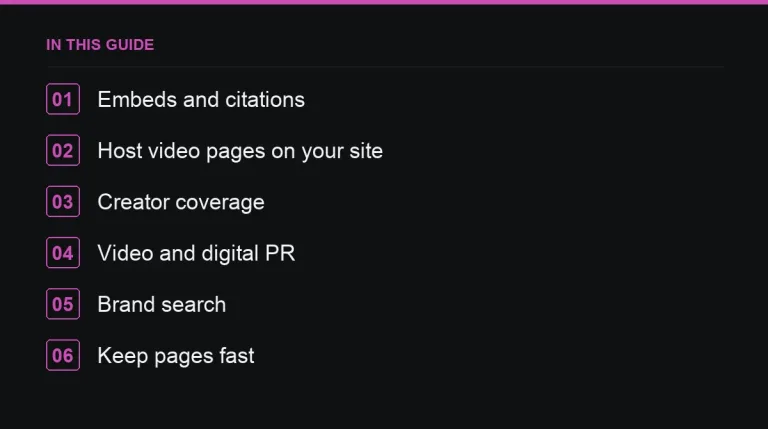
Embeds and citations
When other sites embed your video in their articles, they usually credit and link to you, either in the caption or the body text. Useful explainer videos — how-tos, product demonstrations, data findings explained on camera — get embedded far more than promotional videos, because they solve the same problem an embedding writer has: making their own article more useful without writing more words.
Hosting video pages on your own site
For important videos, create a dedicated page on your site with the video embedded, a written transcript or summary, and links to related resources. This matters more than it sounds: it gives publishers a page on your domain to link to, rather than only the video platform’s URL, which means the link supports your site’s authority directly rather than YouTube’s. Treat the page itself as a proper linkable asset, not just a wrapper around an embed code.
Creator coverage and partnerships
Creators reviewing or featuring products often link in their descriptions and, sometimes, on their own websites if they run one alongside their channel. Always disclose paid partnerships clearly — both because it’s required in most jurisdictions and because undisclosed placements tend to surface eventually and damage trust in the creator and the brand alike. For product-heavy niches, see link building for consumer electronics for how review programmes typically work in practice.
Video and digital PR together
A short video explaining a data campaign’s findings makes the pitch more attractive to online publishers, many of whom would rather embed a thirty-second clip than describe a chart in prose. If you’re already running data-driven PR campaigns, adding a simple video summary to the pitch package is a small addition with an outsized effect on pickup, since it gives time-pressed editors something ready to publish as-is.
Video formats that tend to get embedded
- Step-by-step how-tos that solve a specific, searchable task.
- Data or research explained on camera, especially with simple on-screen charts.
- Product comparisons and side-by-side demonstrations.
- Short expert commentary clips reacting to news in your industry.
Brand search as a measurable outcome
A strong video presence drives people to search for your brand by name, which supports your site’s visibility in ways that don’t show up as a traditional backlink but still matter for overall authority and trust signals. Track branded search volume alongside your usual link metrics — see reporting on digital PR beyond link counts for how to fold that into reporting that goes beyond a simple link count.
Keeping pages fast despite video
Embedded video can slow pages considerably if it’s implemented carelessly. Use lightweight embed techniques that load the actual player only when a user clicks a thumbnail, rather than loading the full player on page load — see the technical checklist to run before a link campaign for other performance issues worth fixing before you invest heavily in outreach.
Choosing between platforms for the video itself
Where you host the primary video matters less than having a plan for both discovery and citation. A large platform like YouTube gives you search discovery within the platform itself and a built-in audience of people already browsing for how-tos in your category; hosting the same video natively on your own page, alongside a transcript, gives you the citable page discussed above. Most well-run video strategies use both: publish to the platform for reach, and mirror the content on-site for the link and SEO value the platform link alone won’t provide.
A realistic production bar
You don’t need studio production values for most of this to work. A clearly recorded screen capture with a script, decent audio, and simple captions will get embedded just as readily as a highly produced piece, provided it actually solves the viewer’s problem faster than reading would. Spend the production budget on clarity and accuracy first, and only add polish once you know a format is earning embeds and citations consistently.
Where to go next
Video works best as one piece of a wider linkable-asset strategy — pair it with a statistics page or a free tool covering the same topic, and consider a few placements from a marketplace of publisher websites to help a flagship video page rank in the first place.
Frequently asked questions
Do YouTube description links help SEO?
Directly, very little, as they're usually nofollow. Indirectly, videos drive embeds, brand searches and coverage.
Should I host videos on my own site?
Create pages on your site for key videos, with transcripts, so there's something on your domain to link to.
Does embedded video slow down pages?
It can. Use lightweight embeds that load the player on click.
Put it into practice
Filter 54,483 websites by DR, traffic, niche and price, and order with escrow — you pay only after the link is live.
Browse the marketplace