Link Building for Mental Health and Wellbeing Services
Mental health is a sensitive YMYL area.
Mental health is a sensitive YMYL area. Links should come from responsible, expert content and professional credibility, never from sensationalism.
Why mental health and wellbeing services link building is different
This is one of the few niches where getting the tone wrong can cause real harm, not just reputational damage, which means link building has to be secondary to responsible messaging at every step. The upside is that publishers in this space are unusually careful about who they link to, so credible, professional-reviewed content tends to earn links that stick. That carefulness cuts both ways: a single piece that reads as promotional or clinically shaky can end a relationship with an editor permanently, not just for that one pitch. Teams that invest in getting the tone and the clinical review right the first time tend to find doors stay open for years, which matters more in this niche than in almost any other.
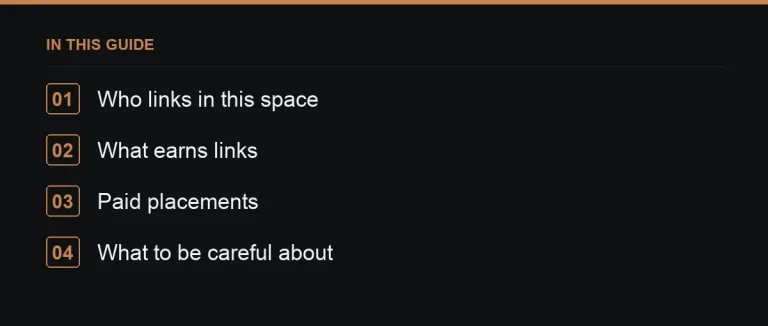
Who links in this space
- Health publications with editorial standards
- Professional bodies and therapist directories
- Charities and support organisations
- Workplace and HR publications
- Community and support forums with moderation standards
What earns links
- Professional-reviewed resources — clear, compassionate guides written or reviewed by qualified practitioners (health link building).
- Expert commentary — qualified professionals responding to journalists on relevant news (getting quoted).
- Workplace wellbeing — practical guidance for employers, written for HR and business media.
- Professional directories — accredited listings relevant to your qualifications and region.
- Charity partnerships — genuine collaborations with established support organisations.
A worked example
A therapy practice’s clinical director writes a short, carefully reviewed explainer on a specific, common workplace stressor, framed for an HR audience rather than the general public, and pitches it to a business publication covering employee wellbeing. Because it’s specific, professionally reviewed and free of sensational framing, the piece runs as a bylined article with an author link back to the practice’s credentials page.
Common mistakes
The most damaging mistake is sensational framing to chase clicks — headlines or examples that dramatise distress rather than inform. A second is publishing advice without a named, qualified reviewer, which undermines both trust and safety. A third is omitting crisis resources and signposting entirely, which most reputable publishers will flag before they’ll even consider a byline. Keeping a standard, pre-approved signposting block ready to attach to any piece of content saves time and ensures nothing sensitive goes out without it, even under a tight deadline.
Measuring what’s working
Judge success less by raw link count and more by whether the same publications keep coming back for further comment — repeat requests from journalists are the clearest sign that the content and tone are landing correctly (expert commentary).
Paid placements that fit the niche
Sites in the health niche with editorial standards and named reviewers are the relevant ones; avoid low-quality health blogs with no visible editorial process. Checking whether a site names its medical or clinical reviewers publicly is a fast way to separate genuinely credible health publications from ones simply aggregating unreviewed content. Reading a handful of recent articles before pitching also reveals whether the tone matches your organisation’s safe-messaging standards, which matters more here than almost any other single factor when choosing where to place content. It’s worth building this review into the shortlisting process itself, rather than treating it as a final check, since ruling out a mismatched publication early saves everyone involved time and avoids an awkward retraction later. Vet every site for relevance, real traffic from your market and editorial quality (evaluation checklist), and keep anchors natural and varied (anchor text strategy) rather than repeating the same commercial phrase on every placement.
What to be careful about
Follow safe-messaging guidelines, avoid sensational language, always signpost crisis resources clearly, and never make promises about outcomes (YMYL). When in doubt, have a second qualified professional review copy before it’s pitched. Building this review step into the workflow from the start, rather than treating it as a bottleneck to route around when a deadline is tight, is what separates organisations that maintain long-term media relationships in this niche from those that burn through them after a single ill-judged piece.
Where to go next
Identify one qualified team member willing to be the named voice for media commentary, and start with a single well-reviewed explainer aimed at a specific, narrow audience rather than a broad general-health pitch. Give that person time to build a relationship with a handful of health and business journalists over months, not weeks; in this niche, a trusted, repeat source is worth far more than a wide contact list nobody actually replies to. Compare shortlisted publishers side by side before you commit budget (compare tool), and browse https://successtoroad.com/marketplace/ once you know which niches and price bands fit your plan.
Frequently asked questions
What content is appropriate for mental health link building?
Professional-reviewed, compassionate resources that follow safe-messaging practices and avoid sensational framing.
Should mental health content include crisis resources?
Yes, always, clearly signposted regardless of the specific topic being covered.
Who should be quoted in mental health PR?
A named, qualified professional — generic company statements carry far less weight with health journalists.
Is workplace wellbeing content a good angle for this niche?
Yes; it reaches HR and business publications with a practical framing that's easier to place than general consumer content.
Put it into practice
Filter 54,483 websites by DR, traffic, niche and price, and order with escrow — you pay only after the link is live.
Browse the marketplace