Link Building for Gardening and Outdoor Brands
Gardening is seasonal, practical and community-minded.
Gardening is seasonal, practical and community-minded. Links come from planting guides, local involvement and genuinely useful seasonal content.
Why gardening and outdoor brands link building is different
Gardening searches spike hard around specific seasonal windows, and the content that earns links is almost always tied to a specific region and month rather than generic “how to garden” advice that could apply anywhere. Community involvement — allotments, school gardens, local shows — also carries unusual weight in a niche where trust is built face to face as much as online. A garden centre that sponsors a school growing project or judges a local produce show earns goodwill that shows up later as a willingness from local editors to run a seasonal press release without much persuasion. That kind of relationship capital rarely shows up in a backlink report, but it’s usually the reason a pitch gets opened rather than deleted.
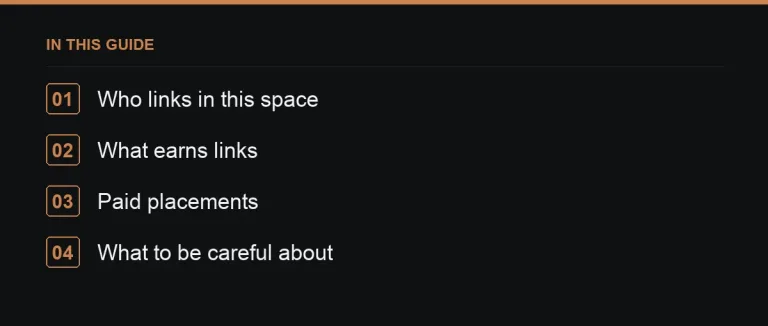
Who links in this space
- Gardening blogs and magazines
- Allotment and community garden groups
- Home and lifestyle publications
- Local press
- Environmental and wildlife organisations for pollinator-friendly content
What earns links
- Planting calendars — region-specific, month-by-month guides that stay useful year after year with small updates.
- Plant problem guides — pests and diseases with clear photos, which get linked from forums and community groups.
- Tools — plant spacing or soil calculators that solve a specific, narrow problem (free tools).
- Community involvement — school and community garden projects that local press covers (local links).
- Wildlife-friendly guides — pollinator and habitat content that environmental sites reference.
A worked example
A garden centre publishes a region-specific planting calendar for its own climate zone, timed to go live six weeks before the growing season starts, and pitches it to local lifestyle sites alongside a related community-garden sponsorship it’s already running. The calendar gets linked as a seasonal reference; the sponsorship story earns a separate, unrelated local press link a few weeks later.
Common mistakes
The most common mistake is publishing a single generic planting guide with no regional specificity, which limits its usefulness and its link potential. A second is missing the seasonal window — publishing and pitching after the growing season has already started, when most search and media interest has passed. A third is neglecting photos in pest and disease guides, which are exactly what makes this content linkable. Investing in a small library of clear, well-lit problem photos, built up over a season or two, pays off repeatedly across multiple guides rather than needing to be recreated for every new piece of content.
Measuring what’s working
Track organic traffic to seasonal pages month over month; a well-timed planting calendar should show a repeatable annual spike, which is a good signal to refresh and re-pitch it the following year (seasonal SEO). It’s also worth comparing which regional variants of the calendar perform best, since a generic national guide rarely earns as many links as several smaller, genuinely regional versions pitched to the right local outlets.
Paid placements that fit the niche
The home and family and agriculture niches include gardening sites; seasonal timing matters more than niche breadth for placements here. Building a short seasonal calendar of two or three publishers worth approaching every year saves the repeated research of finding new sites from scratch each season. Note which editors responded well to a pitch and which topics they preferred, and use that record to shape next year’s approach rather than starting the relationship over from zero each spring. A gardening editor who ran one seasonal piece is often glad to hear from the same source again the following year, provided the next pitch offers something genuinely new rather than a reworded repeat. Vet every site for relevance, real traffic from your market and editorial quality (evaluation checklist), and keep anchors natural and varied (anchor text strategy) rather than repeating the same commercial phrase on every placement.
What to be careful about
Seasonality is everything: publish and build links ahead of the growing season, not during or after it, and revisit evergreen guides annually rather than letting them go stale. A simple annual calendar entry to revisit each seasonal guide, a few weeks before its relevant window opens, is enough to catch outdated advice, broken links and superseded product recommendations before they cost you both traffic and the trust of returning readers.
Where to go next
Map out your region’s planting calendar for the next twelve months, identify which seasonal moment is closest, and get the relevant guide published and pitched at least six weeks ahead of it. Once the first regional calendar is live and earning links, use the same structure for neighbouring regions or a different plant category, rather than starting the research from scratch each time. Compare shortlisted publishers side by side before you commit budget (compare tool), and browse https://successtoroad.com/marketplace/ once you know which niches and price bands fit your plan.
Frequently asked questions
When should gardening sites build links?
Ahead of the season, typically in late winter and early spring, so content is live before search interest peaks.
What content earns gardening links?
Region-specific planting calendars, photo-led problem-solving guides and useful calculators.
Does community garden involvement really help SEO?
Indirectly, yes — it tends to earn genuine local press coverage that a purely commercial pitch wouldn't.
How often should planting calendars be updated?
At least annually, timed to go live well ahead of the relevant growing season.
Put it into practice
Filter 54,483 websites by DR, traffic, niche and price, and order with escrow — you pay only after the link is live.
Browse the marketplace