Link Building for Gaming Websites
Gaming audiences are huge, loyal and allergic to marketing. Here's how studios and gaming sites earn links anyway.
Gaming has enormous audiences and very active publishers, ranging from major games media to small blogs covering a single title in obsessive detail. It also has an audience that dislikes anything that feels like advertising. Links come most easily to brands and sites that contribute something players actually want, rather than to anything that reads as promotional.
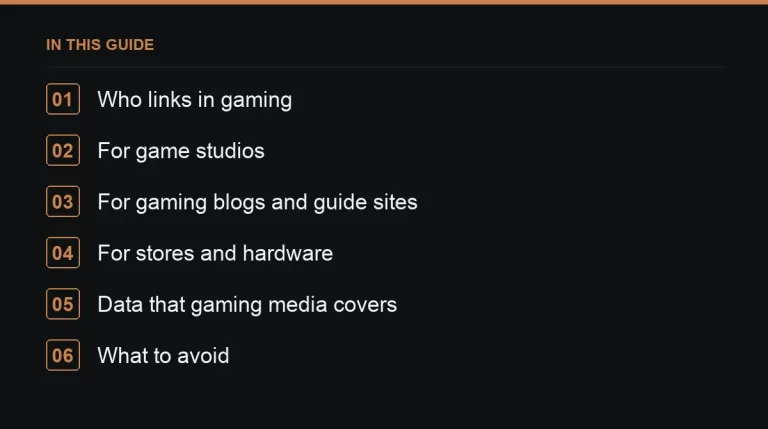
Who links in gaming
- Games news and review sites covering releases, patches and industry news.
- Guide and wiki sites built around one specific game or franchise.
- Community blogs, fan sites and esports coverage.
- Tech and hardware sites, for peripherals, PCs and consoles.
- Creators who link in video descriptions and on their own sites.
For game studios
- A proper press kit — screenshots, a trailer, a fact sheet, logos and a working contact. Journalists link to press kits directly when covering a game, saving them the trouble of hosting the assets themselves.
- Review keys sent to relevant reviewers and creators, well before launch, not the day before.
- Development blogs and postmortems — the gaming press and developer communities link to honest, behind-the-scenes content far more than to marketing copy.
For gaming blogs and guide sites
Comprehensive guides, tier lists, calculators and interactive maps for popular games earn links from forums and communities, and they rank for high-volume searches that a general games news site would never target. Update them with every patch; stale guides lose links and traffic fast once a game’s meta shifts (refreshing old content that’s slipping).
For stores and hardware
Buying guides, benchmark data and compatibility tools attract links from tech and gaming sites that need to answer “what should I buy” for their readers. Look at the games, gadgets and computers niches for relevant placements that reach the right buyers.
Data that gaming media covers
Surveys of players, playtime or spending trends, hardware price tracking, and esports viewership analysis all get picked up by gaming media looking for a data hook. Anonymised data from your own platform, presented with a clear methodology, is especially strong (building a data-led campaign).
What to avoid
- Undisclosed sponsored reviews — audiences and regulators both object, and gaming communities are quick to call it out publicly.
- Low-quality “gaming” sites that publish sponsored posts on every topic under the sun (red flags to check for before ordering).
- Spamming communities with links. It gets brands banned from the forums and Discord servers that matter most, often permanently.
Building relationships with creators
A single video mention rarely produces a durable link on its own, since video descriptions and platform links behave differently from a webpage. The more useful long-term move is building a relationship with creators who also run a blog, wiki or community site, where a mention becomes a lasting, linked reference rather than a post that scrolls out of view within a day.
Timing around launches and patches
Gaming coverage clusters heavily around specific moments: announcement, launch week, major patches and anniversaries. A press kit or guide that isn’t ready before the moment it’s needed largely misses the window, since gaming media moves fast and rarely revisits a story once it’s cooled off. Build assets ahead of the date rather than reacting to coverage after it happens, and keep a simple content calendar tied to your own release schedule.
Working with publishers and platform holders
Console and storefront platform holders sometimes run their own editorial features and curated lists, separate from independent press, and getting featured there requires a different relationship built through platform-specific submission processes rather than a standard press pitch. It’s worth tracking these opportunities separately from your regular outreach calendar, since deadlines and requirements tend to be stricter and less flexible.
Localisation and regional communities
Gaming audiences split heavily by region and language, and a press kit or guide translated properly for a non-English-speaking community often earns links from sites that a purely English pitch would never reach. If a title has meaningful audiences in several regions, budget for localised assets rather than assuming a single English-language kit covers every market equally well.
Handling criticism and community backlash
Gaming communities are vocal, and a studio or brand that responds defensively to criticism tends to lose links and goodwill rather than gain them. Sites and creators are far more likely to link to a brand that engages honestly with feedback than one that only ever shares good news, and that reputation directly affects whether journalists choose to cover your next release at all.
Where to go next
Studios should start with the press kit and reviewer relationships; guide sites and stores get more mileage from durable tools and comparison content. Either way, the games niche marketplace is a faster way to find sites with real player audiences than cold outreach to a long, unqualified list, and a quick site evaluation before pitching saves time on both sides.
Frequently asked questions
How do indie studios get press coverage?
A clear press kit, early review keys, a genuine story about the game or studio, and pitches sent to journalists who already cover similar games rather than a mass blast.
Are gaming guide sites good for backlinks?
Popular, well-maintained guide sites with large, active audiences can be excellent sources. Check traffic and relevance to your specific game or product before reaching out.
Do creator links help SEO?
Links in video descriptions are usually nofollow, but creator coverage drives traffic, brand searches and secondary press coverage, which indirectly supports SEO.
Should studios pitch every gaming site that accepts guest posts?
No. Focus on sites whose recent coverage matches your genre and audience; a generic sponsored-post site adds little relevance regardless of its traffic number.
Put it into practice
Filter 54,483 websites by DR, traffic, niche and price, and order with escrow — you pay only after the link is live.
Browse the marketplace