How Much Does a Guest Post Cost? What Drives the Price
Guest post prices run from a few dollars to several thousand. Here is what drives the number, what counts as fair, and when paying more is worth it.
Browse any guest post marketplace and the price range looks almost random: one site asks a few dollars, another with similar metrics asks hundreds. The prices aren’t random, though. They reflect a handful of consistent factors, and once you know them, you can tell a fair price from a trap.
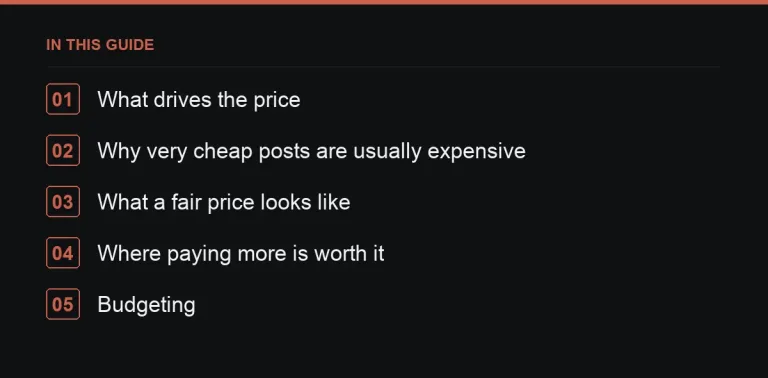
What actually drives the price
Real organic traffic
Traffic is the single biggest factor on well-run sites. A publisher with a real audience knows each sponsored post costs a little reader trust, so they charge accordingly and accept fewer posts than a site with no readers to lose. This is also why organic traffic is a better starting filter than any authority score.
Selectivity
Some sites accept almost anything submitted; others turn down most requests. The more selective a publisher is, the higher the price tends to be, and the more that placement is usually worth, because your link isn’t sitting alongside hundreds of others published the same month.
Niche
Finance, legal, health and software placements typically cost more. These topics carry high commercial value and many publishers apply stricter editorial review before accepting anything in them. Compare, for example, pricing in finance with lifestyle on our marketplace to see the gap for yourself.
Writing and extras
Whether the publisher writes the article, how long it runs, whether it gets homepage placement, and how many links it may contain all move the price up or down.
Why very cheap posts are usually expensive later
A handful of dollars for a guest post on a site that claims high authority tells you something about how that site operates. Publishers selling in volume tend to have:
- many unrelated commercial links scattered across every page,
- little real traffic behind an inflated authority score,
- a meaningfully higher chance of being devalued or deindexed later.
The real cost isn’t the sticker price. It’s the time spent placing a link that eventually stops counting, and in the worst case, the pattern it adds to your whole backlink profile. Our list of link farm red flags helps you spot these sites before you pay, not after.
What a fair price looks like
Instead of fixating on a single number, compare the price against what you’re actually buying:
| Signal | Supports a higher price | Suggests the price is too high |
|---|---|---|
| Traffic | Steady organic traffic in your market | Authority score with little real traffic |
| Relevance | Site is squarely in your niche | General site that covers everything |
| Editorial | Edited content, real named authors | Unedited filler, no bylines at all |
| Terms | Permanent post, writing included | Removal after 12 months, extras charged |
A simple sanity check is cost per thousand monthly organic visitors. It isn’t a precise measure of value, but it quickly surfaces listings priced on authority alone rather than on an actual audience.
Negotiating without insulting the publisher
Prices on most listings have some flexibility, especially for repeat orders or bundled placements across several of a publisher’s sites. Ask politely, mention volume if you have it, and be ready to accept a firm no — a publisher who won’t move on price for a single order is often the same one who won’t cut corners on quality either. Our guide to negotiating guest post prices goes through the specifics.
Where paying more is worth it
Pay a premium when a placement does something a cheap one can’t: puts you in front of the right audience, sits on a publication your prospects already recognise, or supports a page that drives revenue directly. For a brand-new site, a small number of strong, relevant placements usually beats a large number of weak ones, as covered in link building for new sites.
It’s also worth paying more when a placement is doing double duty: a strong publisher with an engaged audience can drive direct referral traffic and email sign-ups on top of the link, which a cheap, low-traffic site simply cannot offer regardless of its authority score. Weigh that combined value against the price rather than treating every purchase as a pure link transaction.
Comparing prices across a shortlist
Once you’ve vetted a handful of sites using the checks in how to evaluate a guest post site, put their prices side by side rather than judging each one in isolation. A site priced noticeably above similar competitors should have a clear reason: more traffic, tighter editorial standards, or a stronger topical match. If you can’t identify the reason after a few minutes of digging, ask the publisher directly, or move on to the next candidate on your list.
Where to go next
Decide the budget per target page, not per link. A money page competing against sites with dozens of relevant referring domains needs sustained spending over months, and our budget planning guide walks through the numbers. The marketplace lets you sort any niche by price so you can see the real range before committing to anything, and the bulk domain check is useful once your shortlist gets long.
Frequently asked questions
What is the average price of a guest post?
It varies too much by niche and quality for an average to be useful. Many relevant sites with real traffic fall in the low hundreds of dollars; premium publications cost far more; very cheap listings often carry hidden costs.
Does a higher DR justify a higher price?
Only if traffic and relevance back it up. DR alone can be inflated through manufactured links. Compare price against real organic traffic and topical fit before accepting a high price on metrics alone.
Is it cheaper to write the article myself?
Often yes, and you keep control of quality and messaging. But some publishers only accept their own writers' content, and a native writer who knows the site's audience can be worth the extra cost.
Should I ever pay for a link with no traffic if the DR is high?
Rarely. A high DR with negligible traffic is one of the clearest signs of an inflated or manufactured profile. Traffic and relevance should carry more weight than any single authority score.
Put it into practice
Filter 54,483 websites by DR, traffic, niche and price, and order with escrow — you pay only after the link is live.
Browse the marketplace