What Is an Expired Domain? Definition and Why It Matters
Expired domains come with their old backlinks attached. That's exactly why they're sought after — and exactly why search engines watch them closely.
An expired domain is a domain name whose registration was allowed to lapse by its previous owner and has since become available for anyone else to register. Because a domain can carry years of history — including backlinks earned by whatever site previously lived there — expired domains have long attracted attention from people looking for a shortcut to authority.
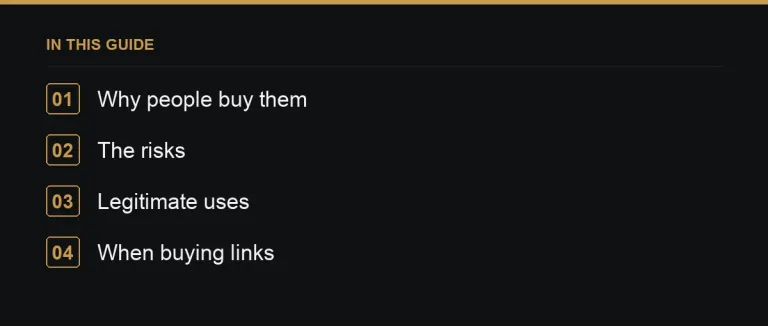
Why people are drawn to expired domains
- To build an entirely new site on a domain that already has an established backlink profile and search history, hoping to inherit some of that authority.
- To 301-redirect the expired domain’s accumulated links toward a different, existing site.
- To build networks of expired domains as part of a private blog network, using their pre-existing authority to link into a money site (PBN risks).
The real risks involved
Search engines pay attention to whether a site’s purpose and content genuinely continue after a domain changes hands, or whether the domain has simply been repurposed to manufacture authority for something unrelated. Links earned by the previous site, pointing at content that no longer exists and has been replaced with something entirely different, don’t reliably carry over the way buyers hope. Using expired domains specifically to fabricate authority — rather than for a genuine, related purpose — is a recognised pattern that search engines have specifically targeted over the years, and sites built this way tend to see their apparent advantage evaporate once discovered.
Legitimate uses of an expired domain
Not every expired-domain purchase is a manipulation attempt. Buying a domain simply because the name happens to suit your brand, with no expectation of inheriting SEO value, is entirely normal domain registration. Buying a domain that was genuinely related to your business — for example, a former competitor you’ve acquired, or a brand name you’ve licensed — and redirecting it to consolidate that specific, relevant history can be a legitimate, defensible move.
Spotting expired-domain link schemes when vetting placements
Sites built on expired domains often show a distinctive pattern: unusually strong authority metrics relative to their actual traffic, and a topic history in search tools that has nothing to do with the site’s current content. A site that supposedly covers finance today but whose historical backlink profile is full of links from an entirely different topic — say, pet care — from years ago is worth extra scrutiny before you place a link there (guest post red flags).
A worked example
A domain that once hosted a modest regional news blog lapses after the site closes. Someone registers it, strips the old content, and rebuilds it as a generic “guest post site” covering finance, technology and health topics with no relation to the original blog. The domain still shows a respectable authority score because of links pointing at articles that no longer exist on entirely different subjects. A buyer looking only at the headline authority metric, without checking topic history or current traffic, could easily be misled into thinking this represents genuine relevance and value.
Related terms
Link rot, private blog networks, link schemes.
How to check a domain’s real history before trusting it
Tools that show historical snapshots of a site’s content, combined with a look at its backlink profile’s topic and age distribution, can reveal whether a domain has been quietly repurposed. A consistent topic and steadily built backlink profile over years looks very different from a profile with an odd gap followed by a sudden change in subject matter and a burst of new, unrelated content.
Why this matters even if you’re only buying a placement, not a domain
You don’t need to be purchasing an expired domain yourself to be affected by this pattern — many low-quality “guest post” sites you might be pitched are themselves built on repurposed expired domains, presented as if they were long-established, topically consistent publications. Recognising the pattern protects you as a buyer, not just as someone considering registering a domain directly.
A quick due-diligence checklist
- Does current traffic roughly match what the authority score would suggest, or is there a large mismatch?
- Does the historical content topic match the current content topic?
- Is there a suspicious gap in publishing history followed by a sudden change in direction?
Why some buyers still take the risk anyway
Despite the risks, some marketers continue using expired domains as part of a broader strategy, betting that any given site will go undetected for long enough to be worthwhile. This is a deliberate risk-tolerance decision rather than a safe, defensible tactic, and it’s worth being honest with yourself about which category a given plan actually falls into before committing budget to it.
Where to go next
When vetting a publisher, check their traffic and content history, not just a single authority number — the marketplace‘s filters by traffic and spam score help surface sites with a genuine, consistent history.
Browse every term in the link building glossary.
Frequently asked questions
Do expired domains reliably keep their old SEO value?
Not reliably. Search engines assess whether the site is genuinely continuing the purpose of the previous one before treating old signals as still relevant.
Is buying an expired domain against the rules?
Buying a domain itself isn't. Using expired domains specifically to manufacture or manipulate authority for unrelated content is a recognised link scheme pattern.
How can I tell if a site is built on a repurposed expired domain?
Look for a mismatch between strong authority metrics and low current traffic, or a historical backlink topic completely unrelated to the site's current content.
Is there ever a legitimate reason to buy an expired domain?
Yes — for a brand name you genuinely want, or a domain related to a business you've acquired, with no expectation of inheriting unrelated SEO value.
Put it into practice
Filter 54,483 websites by DR, traffic, niche and price, and order with escrow — you pay only after the link is live.
Browse the marketplace