Can a SaaS Pricing Page Earn Links? Yes, Here Is How
A clear, well-structured pricing page becomes a reference other writers cite when comparing options in your category.

Pricing pages rarely get considered as link assets because they are built purely for conversion. But writers covering “how much does X cost” or building a comparison table often need to reference a pricing page directly, and a clear, well-structured one is more likely to be cited than a confusing or gated one.
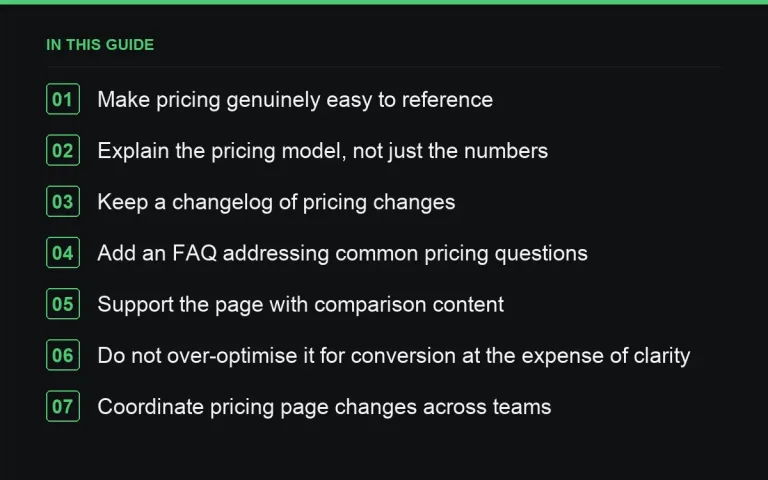
Make pricing genuinely easy to reference
Avoid hiding pricing behind a “contact sales” wall for every tier if you can help it. A page that clearly states at least entry-level pricing gives other writers something concrete to cite, whereas a fully gated pricing page gets skipped in favour of a competitor’s page that is easier to reference.
Explain the pricing model, not just the numbers
Writers covering your category often want to explain how pricing works, not just what it costs: per-seat, usage-based, tiered by feature set, and so on. A pricing page that clearly explains its own model in plain language becomes the natural citation for that explanation.
Keep a changelog of pricing changes
When pricing changes, note it somewhere accessible, even briefly. Writers updating older comparison articles appreciate being able to verify current pricing quickly, and a page that makes this easy is more likely to stay the reference of choice as competitors’ pages go stale.
Add an FAQ addressing common pricing questions
- Whether discounts exist for annual billing or non-profits.
- What happens when usage exceeds a plan’s limits.
- Whether a free trial or free tier is available and what it includes.
This reduces the need for writers to guess or contact support just to answer a basic reader question, making your page the easier one to cite.
Support the page with comparison content
Pricing pages work well alongside the comparison approach in https://successtoroad.com/blog/saas-comparison-page-links/, since writers building “which tool is cheaper” content often need both your pricing structure and a fair comparison to competitors in the same piece.
Do not over-optimise it for conversion at the expense of clarity
A pricing page cluttered with urgency banners, hidden fees revealed only at checkout, or confusing tier names is less likely to be cited approvingly, even if it converts slightly better in isolation. Clarity earns more long-term reference value than aggressive conversion tactics.
Coordinate pricing page changes across teams
Pricing changes usually originate with product or finance, but the page’s link-earning qualities are a marketing concern. Make sure whoever owns pricing decisions loops in the team responsible for the page’s SEO and content quality before a change goes live, so the page does not regress into something confusing or gated purely because nobody flagged the trade-off in time.
Watch what happens after a pricing change
Monitor referral traffic and any drop in external links to the pricing page after a significant pricing model change, since a shift from transparent to opaque pricing, in particular, can quietly cost you citations you had previously earned. Treat this as one more signal in the broader measurement approach covered elsewhere in this series.
Address regional and currency differences clearly
If you sell internationally, be explicit about how pricing works across currencies and regions, since ambiguity here is a common source of both support tickets and inaccurate citations from writers assuming a single global price applies uniformly. A short note addressing this proactively saves confusion on both sides.
Show how plans map to real use cases
Rather than only listing feature checkboxes per tier, briefly describe which plan suits which kind of team or use case. This helps a prospective buyer self-select the right plan and gives an outside writer an easy, accurate way to summarise your pricing structure without needing to guess at who each tier is really for.
Test how the page reads to a first-time visitor
Ask someone unfamiliar with the product to read the pricing page cold and explain back what they understood about cost and plan differences. Any confusion they report is a strong signal of what an outside writer, working with even less context, is likely to get wrong or skip over entirely when referencing your pricing.
Keep historical pricing available internally
Even if you do not publish a full public changelog, keep an internal record of past pricing structures. This makes it much easier to respond accurately if a journalist or blogger asks about how your pricing has evolved, rather than having to reconstruct the history from memory or old marketing materials.
Coordinate pricing page copy with sales messaging
Make sure whatever the pricing page says matches what your sales team tells prospects directly, since a mismatch here damages trust quickly and can also confuse an outside writer who checks the public page after hearing something different from a sales conversation or a support interaction.
Where to go next
Read this alongside https://successtoroad.com/blog/saas-feature-page-links/ and the overall plan in https://successtoroad.com/blog/saas-link-building-guide/. For publishers who cover software pricing and buying decisions, browse https://successtoroad.com/niche/software-development/ and https://successtoroad.com/niche/business/ listings, or check https://successtoroad.com/marketplace/ broadly.
Frequently asked questions
Should pricing be fully public to earn links?
It helps significantly. Fully gated pricing pages are harder for other sites to reference accurately, which reduces the chance of being cited in comparison content.
Do pricing pages need an FAQ to earn links?
It is not strictly required, but an FAQ addressing common billing questions makes the page more self-sufficient as a reference, which increases the odds of it being linked directly.
How often should pricing pages be updated for accuracy?
Whenever pricing actually changes, and reviewed at least a few times a year even without changes, since outdated pricing pages lose credibility as a citation source.
Can a confusing pricing structure hurt link-earning potential?
Yes. Writers avoid citing pages they cannot confidently summarise for their own readers, so clarity directly affects whether your pricing page gets referenced at all.
Put it into practice
Filter 54,483 websites by DR, traffic, niche and price, and order with escrow — you pay only after the link is live.
Browse the marketplace