Building a Newsjacking Calendar
Much of the news cycle is predictable. A calendar turns reactive PR into planned PR.
Newsjacking means adding your genuine expertise to stories already in the news, and the common assumption that it requires constant scrambling is largely wrong. Much of the news cycle is entirely predictable: official data releases, budget days, awareness days, seasonal events and anniversaries all happen on known dates, often published a year or more in advance.
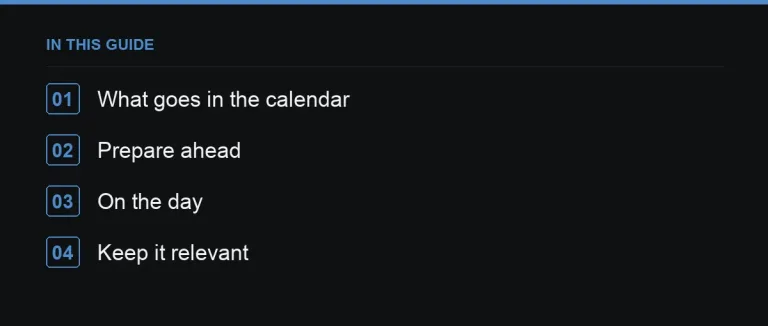
What goes in the calendar
- Official data releases — inflation figures, employment statistics, house price indexes, retail sales data, all published on fixed schedules.
- Policy moments — budgets, interest rate decisions, and new regulations taking effect on announced dates.
- Awareness days and weeks relevant to your specific field or audience.
- Seasonal events — public holidays, back-to-school periods, summer travel season, tax deadlines.
- Industry events — conferences, major product launches, and annual awards in your sector.
Preparing ahead of the date
- Draft expert comments in advance, with clear placeholders for the actual figures once they’re released.
- Get internal approvals sorted well before the date, so nothing is stuck waiting for sign-off when speed matters most.
- Prepare supporting assets — charts, a relevant guide already live on your site, and any data visualisations that make the comment easier to use.
On the day itself
Update the prepared comment with the actual released figures and send it quickly to the specific journalists who cover that beat (reactive PR, journalist outreach). Speed matters disproportionately here — a good comment sent an hour after a data release competes with dozens of others; the same comment sent the next day is largely wasted.
Keeping it genuinely relevant
Only jump on stories where you have real, defensible expertise. Forced connections to unrelated news — a skincare brand commenting on interest rate decisions, for instance — read as opportunistic rather than useful, and damage credibility with journalists who’ll remember the mismatch next time you pitch something genuinely relevant.
Assigning ownership of the calendar
A newsjacking calendar only works if someone is actually responsible for checking it regularly and chasing the approvals it requires — without clear ownership, even a well-built calendar quietly stops being used within a couple of months. Assign one person to own it, even if drafting comments is a shared responsibility across the team, so nothing falls through simply because everyone assumed someone else was watching the date.
Archiving comments after use
Keep a short archive of every reactive comment sent, alongside the date and which journalists received it. This makes it far quicker to update and reuse a comment the following year, rather than starting from a blank page each time a familiar annual moment comes back around.
Automating the reminder, not the comment
A simple recurring calendar reminder a few days before each known date, rather than relying on someone remembering to check a spreadsheet, is a small process fix that meaningfully improves how consistently a calendar actually gets used. The comment itself should still be written and approved by a real person — automation here is about not missing the date, not about generating the content.
Having more than one spokesperson ready
Relying on a single named spokesperson for every reactive comment creates a bottleneck — if they’re unavailable exactly when a data release lands, the opportunity passes entirely. Prepare at least a second, genuinely qualified person who can step in on short notice, and get both pre-approved to speak on the topics most likely to come up, rather than needing fresh sign-off every single time.
Building the calendar itself
| Source | What to add |
|---|---|
| Government statistics office publication schedule | Exact dates for relevant official data releases |
| Industry body calendars | Awareness days, conferences, annual reports |
| Your own sales/traffic data from previous years | Seasonal peaks specific to your business |
| Competitor and trade press activity | Recurring annual stories you could contribute to earlier next time |
A working rhythm
Review and refresh the calendar quarterly rather than building it once and letting it go stale — new awareness days appear, release schedules shift, and last year’s angle may need a fresh spokesperson or updated comment. Treat the calendar as a living planning document that a PR or content team checks weekly, not a one-off spreadsheet built during onboarding and never opened again.
Distinguishing planned reactive PR from genuine breaking news
Not everything in a newsjacking calendar is truly “reactive” in the traditional sense — much of it is closer to scheduled PR with a fixed publish window, since you know the date and rough content of the data release in advance. Genuine breaking news, the kind nobody could have scheduled, still needs a fast, ad hoc response process separate from the calendar, but reserving your calendar specifically for the predictable moments frees up capacity to react quickly when something truly unplanned happens.
Where to go next
A newsjacking calendar works best alongside a broader bank of campaign formats (25 digital PR campaign ideas) and a clear escalation path for pitching regional variations of national stories (pitching regional press). To keep links flowing between reactive opportunities, browse relevant sites in the Digital PR marketplace.
Frequently asked questions
What is newsjacking?
Adding your genuine expertise or relevant data to a story that's already in the news, rather than trying to generate news from scratch.
Can reactive PR really be planned?
Much of it can. Data releases, awareness days, and seasonal events happen on known dates, often published well in advance.
How do I avoid seeming opportunistic?
Only comment on stories where you have real, relevant expertise, and add genuinely useful information rather than a forced mention of your brand.
How often should I update a newsjacking calendar?
Quarterly is a reasonable rhythm — enough to catch new dates and refresh comments without letting the calendar go stale between reviews.
Put it into practice
Filter 54,483 websites by DR, traffic, niche and price, and order with escrow — you pay only after the link is live.
Browse the marketplace