Link Building for Recruitment and Career Websites
Salary data is one of the most-cited types of content on the web. Here's how recruitment brands turn it into links.
Recruitment and career sites sit on some of the most naturally linkable data around: salaries, hiring trends and skills demand. Combined with practical career advice, that data earns links from journalists, universities and HR publications who need current, credible numbers on a recurring basis.
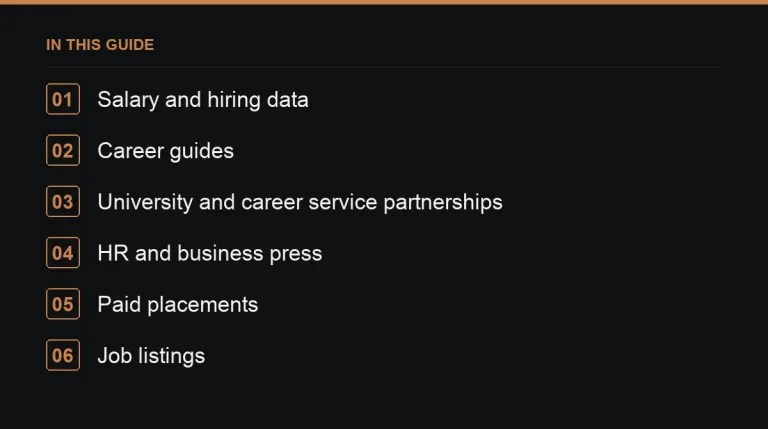
Salary and hiring data
Salary guides by role and region, hiring demand reports and skills trend analyses are cited widely once published with a clear methodology. Update the data regularly and give journalists specific regional and sector angles rather than one generic national release (running a data-led campaign).
Career guides
Practical guides — CV templates, interview preparation, career change plans — earn links from universities, career services and forums looking for something to point students and jobseekers toward. Make them specific: “how to become a data analyst without a degree” earns more links than a generic “career tips” page ever will.
University and career service partnerships
Careers services link to genuinely useful employer and recruitment resources for their students. Offer workshops, guides or events as a starting point; don’t ask for a link outright as the first request, since it tends to read as transactional (education link building).
HR and business press
HR publications cover workplace trends, legislation and hiring practices constantly. Recruiters with genuine, specific insight — not generic commentary — get quoted regularly once they’ve built a relationship with a handful of journalists (getting quoted as an expert source).
Paid placements
The careers niche and business sites both fit well. Relevance to your specific sectors matters — a specialist tech recruiter benefits far more from tech-focused career content than from generic job advice aimed at every industry at once.
Job listings
Individual job ads expire quickly; don’t build links to them directly. Link to sector hub pages and guides that stay live long-term, and link internally from those pages to whichever openings are currently live (internal linking that supports external links).
Content by sector focus
| Recruiter type | Strongest content angle |
|---|---|
| Generalist agency | Broad salary guides, general career advice |
| Tech-focused recruiter | Tech salary benchmarks, skills-demand data, tech career sites |
| Executive search | Leadership hiring trends, HR and business press commentary |
| Graduate recruitment | University partnerships, entry-level career guides |
Coordinating outreach across a distributed team
A shared calendar of who’s pitching what, updated weekly, is usually enough to prevent this without adding significant bureaucracy to a team that’s otherwise fast-moving.
Recruitment agencies with several branch offices sometimes find each branch pitching similar data to the same regional press independently, which can look uncoordinated from a journalist’s perspective. Centralising research and press outreach, even loosely, while still crediting the relevant local branch, tends to produce a more professional impression and avoids the awkwardness of two parts of the same agency competing for the same coverage.
Handling a slow news cycle
Not every month has a fresh dataset ready to pitch, and recruiters sometimes go quiet on outreach between major reports as a result. In the gaps, a shorter, more qualitative piece — a hiring manager’s perspective on a specific interview trend, or a practical explainer tied to a seasonal hiring pattern — keeps the relationship with journalists warm without requiring a full new research cycle each time. Even a brief monthly note flagging one interesting shift in your own hiring data is often enough to stay on a journalist’s radar between the bigger releases.
Repackaging data for different audiences
The same underlying salary and hiring dataset can support several separate pitches: a national trend story for business press, a sector-specific angle for a trade publication, and a practical “what this means for your job search” guide for a careers site. Repackaging one dataset three ways, rather than sending the identical release everywhere, tends to produce more total coverage from a single research effort.
Building relationships with a small group of journalists
Rather than mass-pitching every HR and business publication with each new dataset, cultivating a working relationship with a small number of journalists who cover hiring and workforce trends regularly tends to produce more consistent coverage over time. They come to know what your data is worth and are more likely to reach out proactively when they need a quote or a fresh angle.
Handling sensitive workforce data responsibly
Salary and hiring data can reveal information about specific employers or small samples if not aggregated carefully. Set a clear minimum sample size before publishing a breakdown, and avoid presenting a single client’s data in a way that could identify them without explicit permission — this protects both the recruiter’s client relationships and the credibility of the data itself.
Where to go next
Start with a salary guide for your core sector, since it’s the single asset most likely to generate ongoing press citations. Pair it with a specific, narrow career guide, and use the careers niche marketplace for placements that reach your target candidates and clients alike.
Frequently asked questions
What content earns links for recruiters?
Salary guides and hiring trend reports with clear methodology, plus specific, narrowly targeted career guides rather than generic advice.
Should recruiters build links to job listings?
No. They expire and get removed. Build links to sector hub pages and guides, which can then link internally to whichever openings are currently live.
How often should salary guides be updated?
At least annually, with clear publication dates, so journalists and readers know the data is current before citing it.
Is it safe to publish client-specific hiring data?
Only with clear aggregation and a minimum sample size, or explicit permission. Publishing data that could identify a single client's practices risks the relationship and the data's credibility.
Put it into practice
Filter 54,483 websites by DR, traffic, niche and price, and order with escrow — you pay only after the link is live.
Browse the marketplace