Link Building for Home Improvement and DIY Sites
People research home projects for weeks. Here's how DIY brands, tradespeople and interiors sites earn links from that research.
Home improvement is a research-heavy niche: people plan projects for weeks, compare costs carefully, and look for guides and inspiration before committing to a tradesperson or a purchase. That makes practical content and real cost data especially linkable, more so than glossy inspiration content alone.
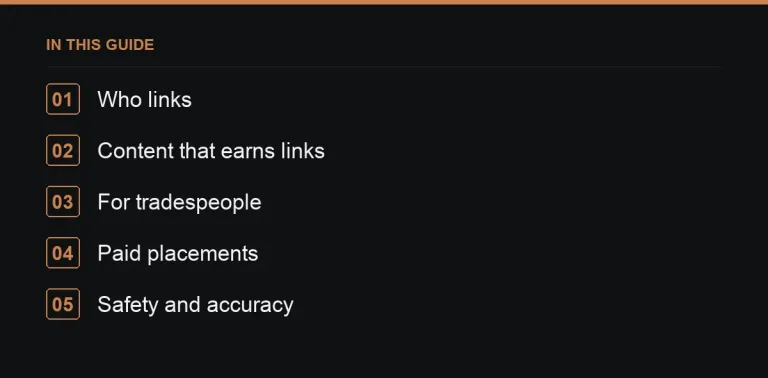
Who links
- Home and interiors magazines and blogs covering renovation and design.
- DIY communities and how-to sites built around specific projects.
- Property and real estate sites, particularly around renovation and resale value.
- Local press, for tradespeople and showrooms serving one area.
Content that earns links
Cost guides
“How much does a kitchen renovation cost in [country]?” — with real price ranges, what drives them, and regional differences explained clearly. Cost data drawn from your own jobs or quotes is particularly strong, and journalists cite it directly when covering the topic.
Step-by-step guides
Detailed how-tos with photos of each step, a full tool list and clear safety notes. Honest difficulty ratings earn trust from readers who’ve been burned by guides that undersell the work involved.
Project galleries
Before-and-after case studies with real details: materials used, budget spent, and timeline from start to finish.
Tools
Paint, tile, flooring and insulation calculators are simple to build and attract links for years after launch (linkable assets that keep paying off).
For tradespeople
Local directories, trade associations, supplier pages and local press matter most for a business serving one town or region (local link building fundamentals). Seasonal advice — preparing homes for winter, checking roofs after storms — makes for good, timely local expert comment that journalists actively seek out.
Paid placements
The home and family and construction and repairs niches are the natural starting points. Look for sites with real project content rather than generic “home” articles written purely around a link opportunity (how to evaluate a site before ordering).
Matching content to audience
| Business type | Strongest link source |
|---|---|
| Renovation contractor | Cost guides, project galleries, local press |
| Tool or materials retailer | Step-by-step guides, calculators, comparison content |
| Interior design studio | Interiors magazines, project features, before-and-after content |
| Independent tradesperson | Local directories, associations, seasonal expert comment |
Safety and accuracy
DIY content can cause real harm if it’s wrong — electrics, gas and structural work all carry genuine risk. Be clear about when a professional is required rather than implying every project is a weekend job, and follow local building regulations in anything you publish. Publishers and readers alike trust brands that are honest about their own limits.
Partnering with material and appliance manufacturers
Manufacturers of materials, tools or appliances often maintain installer or retailer directories and co-marketing programmes that independent tradespeople and smaller retailers overlook. Getting listed, and occasionally collaborating on a joint case study using their product, can produce links from a manufacturer’s own well-trafficked site alongside the marketing support that comes with it.
Handling before-and-after content responsibly
Before-and-after project photos are some of the most shareable home improvement content, but they need honest context to stay credible: the actual budget spent, the real timeframe, and any complications encountered along the way. Publishers and readers are quick to distrust a suspiciously perfect transformation with no detail behind it, which limits its value as something worth linking to as a genuine reference.
Working with photographers and videographers
Home improvement content lives or dies on visual quality, since readers are trying to picture their own project and a poorly lit or badly cropped photo undermines an otherwise excellent guide. It’s worth budgeting properly for photography on flagship guides rather than relying on phone snapshots taken mid-job, since these are the assets that will keep earning links for years if they’re done well from the start.
Keeping guides current
Material and labour costs move, sometimes quickly, and a cost guide left untouched for a couple of years starts giving readers numbers that are visibly wrong. Set a reminder to revisit your key cost guides at least annually; a guide that’s clearly current is also more attractive to publishers considering whether to link to it in the first place (refreshing old content).
Combining paid and earned coverage
The strongest home improvement link profiles usually combine earned coverage from genuinely useful tools and guides with a smaller number of deliberate, paid placements on sites that reach buyers actively planning a project. Treat the two as complementary rather than picking one approach exclusively — earned links build the foundation, and paid placements fill gaps in specific publications you can’t otherwise reach.
Where to go next
Build a cost guide or calculator first, since it’s the asset most likely to earn links without ongoing outreach. Then pair it with local press relationships if you’re trade-facing, or placements in the home and family niche marketplace if you’re a retailer or design brand, alongside construction and repairs niche listings for trade-specific coverage.
Frequently asked questions
What content earns links for home improvement brands?
Cost guides with real data, detailed step-by-step how-tos, project case studies and simple calculators that people return to repeatedly.
How do tradespeople build links?
Mostly locally: trade associations, suppliers, directories, local press and genuine community involvement, rather than national campaigns.
Are interiors blogs good for backlinks?
Those with real, engaged audiences and genuine project content are. Vet carefully for sponsored filler before committing to a placement.
Should DIY content include safety warnings?
Yes, wherever relevant. Being clear about when a licensed professional is required builds trust with readers and publishers alike.
Put it into practice
Filter 54,483 websites by DR, traffic, niche and price, and order with escrow — you pay only after the link is live.
Browse the marketplace