Link Building for Beauty and Skincare Brands
Beauty is driven by editors, creators and ingredient-savvy shoppers. Here's how skincare and cosmetics brands earn links.
Beauty is a crowded, creator-driven niche with influential editors and increasingly knowledgeable shoppers who read ingredient lists closely. Links come from coverage in beauty media, useful educational content, and partnerships that are transparent about what’s paid rather than presented as organic enthusiasm.
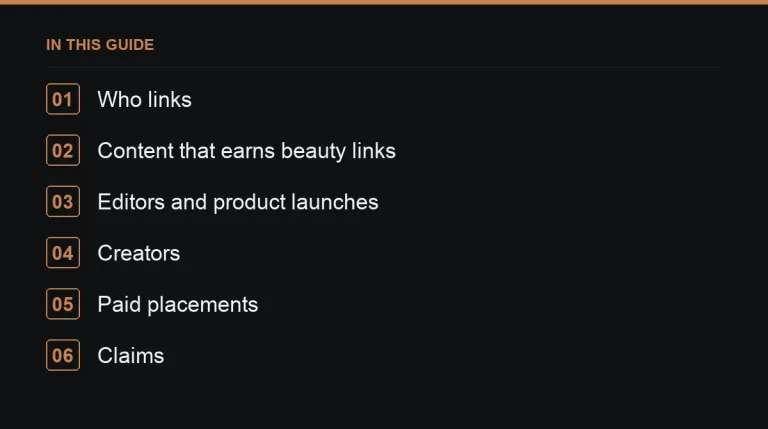
Who links
- Beauty editors at magazines and lifestyle sites planning seasonal features.
- Independent beauty bloggers and reviewers with a dedicated following.
- Dermatology and skin health publications, particularly for evidence-led brands.
- Retailers and stockists that list brand and product information.
Content that earns beauty links
Ingredient explainers
Clear, evidence-based guides to ingredients — what they do, who they suit, how to combine them safely. Ingredient-focused shoppers and bloggers link to trustworthy explanations far more than to marketing copy.
Routines and how-tos
Practical routines for specific skin types or concerns, written with honest caveats about what to expect and what won’t work for everyone.
Data and surveys
Surveys on beauty habits and spending, or trends drawn from anonymised customer data, presented with a stated methodology (data campaigns that get covered).
Editors and product launches
Beauty editors typically plan features months ahead of publication. Send launch information, samples and good product imagery early, and make pricing and availability clear from the start. Product roundups usually link to the product page or a named stockist.
Creators
Creator partnerships drive awareness and sometimes links, particularly when a creator also runs a blog alongside their social channels. Label paid and gifted content clearly; advertising regulators in many countries actively enforce disclosure rules in the beauty space.
Paid placements
Look for sites in the beauty niche and fashion niche with real, engaged audiences. Beauty has more than its share of low-quality sponsored-post sites, so read recent content carefully before committing (red flags to watch for).
Content type by goal
| Goal | Content that fits |
|---|---|
| Build trust with ingredient-aware shoppers | Ingredient explainers with sources |
| Support a product launch | Editor outreach with early samples and imagery |
| Reach a broader audience | Creator partnerships with clear disclosure |
| Earn ongoing organic links | Routine guides and skin-type resources |
Claims
Cosmetic claims are regulated in most markets. Avoid medical claims such as “cures acne” in both content and anchor text, and back up efficacy claims with evidence rather than testimonials alone. It protects you legally and with editors, who generally avoid brands that overclaim. Skin health content in particular overlaps with the standards covered in health niche link building.
Handling negative reviews and reformulations
When a product is reformulated or discontinued, update the original coverage and linked pages rather than leaving outdated claims live indefinitely. Editors occasionally revisit older features to check accuracy, and a brand that proactively flags changes tends to keep better relationships with the press than one that lets outdated information sit unaddressed.
Building a long-term ingredient story
Brands built around a specific ingredient or formulation approach benefit from publishing the deeper research behind it over time — sourcing, testing, formulation choices — rather than a single launch announcement. This kind of ongoing story gives editors and ingredient-focused bloggers new material to cover well after the initial launch coverage has faded.
Sampling and PR boxes
Sending unsolicited PR boxes to a long list of creators rarely produces coverage worth the cost. A smaller, more targeted list of editors and creators whose existing content genuinely matches your brand, contacted with a personal note rather than a form letter, converts to coverage far more reliably than a wide, untargeted mailing.
International and regulatory differences
Cosmetic regulations differ substantially between markets, and a claim perfectly acceptable in one country can be prohibited in another. Brands selling internationally should check local rules before syndicating the same content across markets, rather than assuming a single approved version of a claim travels safely everywhere it’s published.
Standing out in a crowded inbox
Beauty editors and reviewers receive a very high volume of product pitches, so a generic press release rarely stands out. What tends to work is a specific, well-researched angle — a genuine ingredient innovation, a supply chain detail, a founder story with real substance — rather than a list of product features that reads the same as every other pitch that week.
Working with smaller, niche publications
Alongside major beauty media, smaller publications focused on a specific concern — sensitive skin, clean beauty, a particular skin condition — often have smaller but far more engaged and trusting audiences. For brands with a genuinely specific positioning, these niche sites can produce better-qualified traffic and more durable links than a mention in a large general publication that moves on within a day.
Where to go next
Build one strong ingredient or routine guide as your anchor asset, then use it to support both editor pitches and paid placements in the beauty niche marketplace, and check guest posts versus niche edits if you’re deciding how to place a link into an existing well-ranked article.
Frequently asked questions
How do skincare brands get featured by beauty editors?
Relevant product news, samples and clear information sent well ahead of editorial deadlines, plus a genuine story or innovation behind the product.
Do beauty creator partnerships help SEO?
Directly, often modestly, since links may be nofollow. Indirectly, they drive brand searches and further press coverage, which does support SEO over time.
What claims should beauty brands avoid?
Medical or unsupported efficacy claims. Keep claims evidence-based and compliant with local advertising rules for cosmetics.
Is it worth pitching general lifestyle sites for beauty content?
Only if their beauty coverage is genuine and regular. A lifestyle site that occasionally publishes sponsored beauty posts on any topic offers little real relevance.
Put it into practice
Filter 54,483 websites by DR, traffic, niche and price, and order with escrow — you pay only after the link is live.
Browse the marketplace