What to Check When Your Guest Post Goes Live
The post is live — now spend five minutes checking it properly before you approve payment. This checklist catches the common problems.
A guest post going live isn’t the finish line, it’s the point where a five-minute check either confirms you got what you paid for or catches a problem while the publisher is still responsive. On Digital PR, payment stays in escrow until you approve the order, so this is exactly the moment to do it properly rather than rubber-stamping it.
Why this check gets skipped, and why it shouldn’t
Buyers who place a lot of orders start to trust that a publisher who delivered correctly last time will do so again. Most of the time that’s true. But the cost of checking is a few minutes, and the cost of not checking is discovering months later, when you’re auditing your backlinks, that an anchor was swapped or a page was quietly noindexed. The asymmetry favours checking every time.
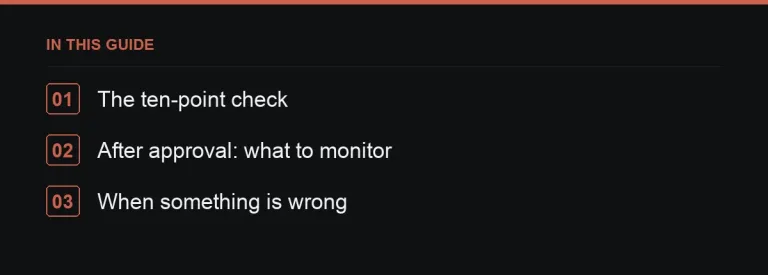
The ten-point check
1. The link exists and points to the right URL
Click it. Confirm it goes to the exact page you briefed, including the correct protocol, no typos in the path, and that it doesn’t redirect somewhere unexpected along the way.
2. The anchor text is what you agreed
Or a natural variation you specifically accepted in advance. Watch for anchors quietly changed to something generic like “click here” during editing — see anchor text strategy for how to brief this clearly up front.
3. Link attributes match the listing
Inspect the link’s markup and check whether it carries a sponsored or nofollow attribute, and whether that matches what the listing stated before you ordered. Read what each attribute means if the terminology is unfamiliar.
4. The page can actually be indexed
View the page source and search for “noindex” in the meta tags. Also confirm the canonical tag points to the page itself, not to some other URL on the site.
5. The page isn’t blocked by robots.txt
Open the site’s robots.txt file directly and make sure the folder the post lives in isn’t disallowed for crawlers.
6. Placement inside the content
The link should sit in the body of the article, in context, not squeezed into a footer, a sidebar, or a list alongside several other unrelated sponsored links.
7. The article matches what you approved
If you supplied the article yourself, skim the published version for unapproved edits, extra links slipped in, or sections quietly removed.
8. How many other links share the page
One or two other outbound links is normal editorial practice. Several unrelated commercial links on the same page dilute yours and signal a placement page rather than genuine content.
9. The page is actually reachable
Can you find the post from the site’s homepage, blog index or category pages? An orphaned post with no internal links pointing to it is slower to be crawled and discovered.
10. Take a record while it’s fresh
Save the URL, the date, the anchor used and a screenshot or archived copy. It becomes your evidence if the post changes or disappears later.
After approval: what to keep monitoring
- Indexing. Search for the post URL after a couple of weeks. If it still isn’t indexed, raise it with the publisher rather than assuming it will sort itself out.
- Link persistence. Re-check placements periodically. Links do disappear, especially on sites that change ownership or redesign.
- Referral traffic. Your analytics will show visits arriving from the post. Any measurable amount is a reassuring sign of a real audience behind the site.
- Target page performance. Rankings move over months, not days, so track the destination page rather than staring at the link itself. See how to measure the return on link building.
When something is wrong
Ask the publisher to fix it before you approve the order. Common, entirely reasonable requests include correcting the destination URL, restoring the agreed anchor, moving the link into the body copy, or removing an unexpected noindex tag. If a publisher won’t fix a clear, documented problem, most marketplace orders let you request a revision or open a dispute while funds stay safely in escrow until it’s resolved — see how ordering and escrow work on Digital PR.
Building the checklist into a routine
A checklist only helps if it’s actually used every time, not just on the placements that feel risky. Attach it to whatever workflow you already use to track orders, whether that’s a shared spreadsheet, a project management board, or the order history in the marketplace itself, so approving a post and running the checklist happen in the same step rather than the checklist being a separate task that’s easy to skip when you’re busy.
Where to go next
If you’re placing enough posts that checking each one manually feels like a bottleneck, read scaling guest posting without losing quality for how to turn this checklist into a repeatable step in a larger process, and our list of guest post red flags to catch bad publishers before you ever place an order with them.
Frequently asked questions
How long until a guest post gets indexed?
Often anywhere from a few days to a few weeks, depending on how frequently the site is crawled and whether the post is linked from other pages on the same domain.
What if the link is removed later?
Check your saved records and contact the publisher directly. Reputable publishers restore removed links promptly; repeated removals from the same site are a good reason to stop ordering from it.
Should I build links pointing to my own guest post?
Occasionally sharing it or linking to it from your own site is fine and can help it get discovered. Building paid links specifically to a guest post rarely makes economic sense.
Is it worth checking a post that a trusted publisher delivered many times before?
Yes, briefly. Ownership, editorial staff and site policies change, and a five-minute check costs far less than discovering a problem during a later audit.
Put it into practice
Filter 54,483 websites by DR, traffic, niche and price, and order with escrow — you pay only after the link is live.
Browse the marketplace