How Site Speed and UX Affect Your Link Building Results
A slow, hard-to-navigate site loses the value of links it earns because visitors and publishers judge you the moment they arrive.
Link building doesn’t operate in isolation from the rest of your site. A slow-loading page or a confusing layout can quietly undo a meaningful share of the value that a hard-earned link was supposed to deliver, in ways that have nothing to do with backlink metrics.
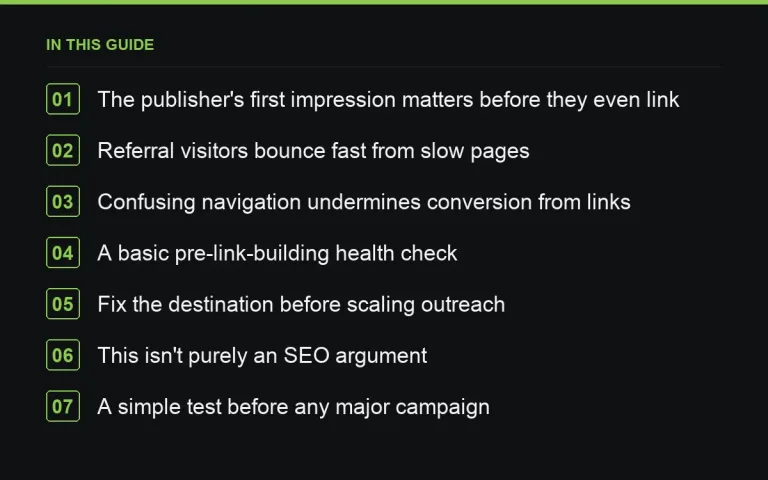
The publisher’s first impression matters before they even link
When a publisher or journalist evaluates whether to link to your page, they typically visit it first. A page that loads slowly, is cluttered with intrusive pop-ups, or looks outdated damages your credibility in that moment, independent of how good your content actually is. This can cost you the link before outreach even gets a fair hearing.
Referral visitors bounce fast from slow pages
A reader who clicks a link from an article they were engaged with, only to land on a page that takes several seconds to load, frequently leaves before it finishes. The link did its job of sending a visitor, but a poor landing experience wastes that visitor before they see anything. This directly reduces the real-world value of every link you build, regardless of its SEO metrics.
Confusing navigation undermines conversion from links
Even a fast-loading page can fail if the visitor can’t quickly find what the linking content promised. If a guest post promotes a specific guide or product and the linked page buries that content beneath unrelated navigation or requires several clicks to reach the point, much of the link’s practical value is lost, even though it still counts in a backlink report.
A basic pre-link-building health check
- Does the specific page you’re promoting load quickly on both desktop and mobile connections?
- Is the core content of that page visible and readable without excessive pop-ups or interstitials?
- Does the page clearly deliver what an incoming link’s anchor text or context would lead a visitor to expect?
- Is the page mobile-friendly, given a large share of referral clicks now arrive on phones?
Fix the destination before scaling outreach
If you’re about to invest meaningfully in link building, it’s worth spending a proportional amount of effort making sure the destination pages are fast, clear and genuinely deliver on what the link promises. Building links to a page that then fails to convert or retain visitors is a common, avoidable way to waste a link building budget.
This isn’t purely an SEO argument
Even setting aside any indirect ranking effects of site experience, the direct, immediate cost of a poor landing page — in lost engagement, lost leads, lost credibility with the publisher — is reason enough to fix these basics before scaling up outreach or spend on https://successtoroad.com/marketplace/.
A simple test before any major campaign
Before launching a significant guest posting or digital PR push, load the destination page on a mid-range mobile device over a typical connection, not just on a fast office wifi connection with a high-end laptop. Time how long it takes to see the main content, and try to complete the action you’d want a referral visitor to take — reading the key point, signing up, making contact. If this simple test feels slow or frustrating to you, it will feel the same to the visitors your link building is about to send.
Prioritising fixes when resources are limited
Not every site can undertake a full technical overhaul before its next campaign, and that’s fine — prioritise the specific pages you’re actively promoting first, rather than trying to fix the entire site at once. A handful of key landing pages loading quickly and clearly is enough to capture most of the value from an active link building push, even if less-visited parts of the site still need work later.
Where to go next
Read https://successtoroad.com/blog/placement-and-crawlability-basics/ for the crawling side of technical health, https://successtoroad.com/blog/measuring-link-building-roi/ for tracking whether links are actually converting, and https://successtoroad.com/blog/documenting-links-you-build/ for tracking destination page performance alongside the links themselves.
Core web vitals and similar technical measures
Various technical measures of loading speed, interactivity, and visual stability exist as ways to quantify what “fast” and “smooth” actually mean for a given page. You don’t need to become a technical specialist to benefit from these, but running your key landing pages through a standard speed testing tool periodically gives you a concrete, trackable measure rather than relying purely on subjective impressions of whether a page feels fast.
UX issues that specifically undermine link building
Beyond raw speed, a few specific UX patterns are particularly damaging to the value of an incoming link: aggressive pop-ups that appear before a visitor has read anything, content that requires multiple clicks or a sign-up wall before delivering on what the link promised, and inconsistent mobile layouts that break or hide key content. Audit your top landing pages specifically for these patterns before investing heavily in driving new links toward them.
In short, technical site health and link building success are more connected than most strategies acknowledge, and a modest investment in fixing the basics on your key pages tends to pay for itself many times over across every subsequent placement you earn.
Frequently asked questions
Does site speed affect whether a link ranks well?
It can contribute indirectly through broader site quality signals, but the more immediate, certain effect is on visitor retention and publisher impression, both of which matter regardless of any direct ranking impact.
Should I fix site speed before or after building links?
Generally before, especially for pages you plan to actively promote. Sending new visitors and publisher attention to a slow or confusing page wastes a meaningful share of the effort you put into earning the link.
Do publishers actually check my site before linking to it?
Many do, at least a quick glance, especially for anything beyond a purely paid, guaranteed placement. A poor first impression can cost you a link that otherwise would have been approved.
Is mobile page speed as important as desktop for link building?
Yes, often more so, since a large share of referral clicks from social and some publisher sites arrive on mobile devices.
Put it into practice
Filter 54,483 websites by DR, traffic, niche and price, and order with escrow — you pay only after the link is live.
Browse the marketplace