Link Building for Web Hosting and Internet Services
Hosting is one of the most competitive affiliate niches online. Here's how hosting companies earn links on merit.
Web hosting and internet services are fiercely competitive, with countless affiliate sites ranking “best hosting” lists for nearly every possible search term. Hosts earn durable, merit-based links through what developers and site owners actually use day to day: excellent documentation, transparent performance data and genuinely useful tools.
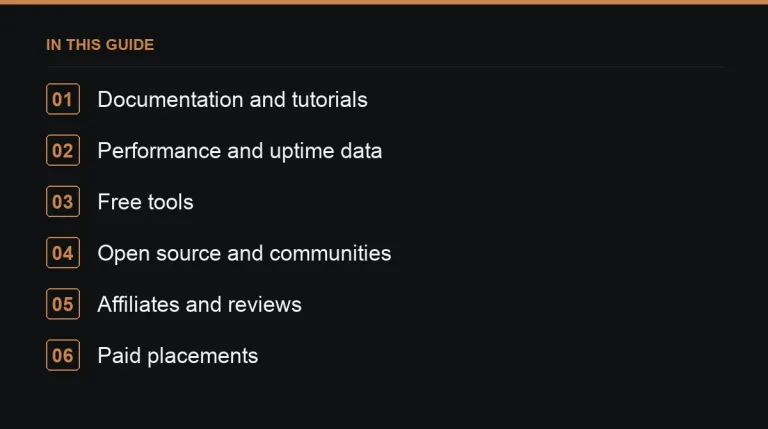
Documentation and tutorials
Clear, current tutorials — setting up SSL, migrating a site, configuring DNS, optimising a common CMS — rank for high-volume technical searches and get linked from forums and developer blogs pointing readers to a reliable reference. Good documentation is arguably the best long-term link asset a hosting company can build.
Performance and uptime data
Publish transparent status pages, uptime history and reproducible speed benchmarks rather than only marketing claims. Reviewers and developers reference credible, verifiable data readily; inflated or unverifiable claims tend to get called out publicly instead.
Free tools
DNS lookup, SSL checker, website speed test, “what’s my IP” — simple utility tools attract links and repeat visits from developers who bookmark them for regular use (linkable assets that keep earning links).
Open source and communities
Sponsoring or contributing to open-source projects and developer events often earns links from project sites and community pages that list their sponsors and contributors publicly.
Affiliates and reviews
Affiliate links are typically marked as sponsored or nofollow on reputable review sites, so treat affiliate programmes as a sales channel rather than a link-building tactic in their own right (link attributes explained). Earn genuine editorial mentions by being reliably good, and by offering reviewers real test accounts rather than only affiliate terms.
Paid placements
The internet, web development and technology niches all fit well. Prefer technical publications with genuine developer audiences over general tech blogs that touch on hosting occasionally.
Where to focus by company stage
| Stage | Priority |
|---|---|
| Early / smaller host | Documentation, free tools, open-source sponsorship |
| Established mid-size host | Published uptime data, developer community involvement |
| Larger host | Independent testing lab partnerships, conference sponsorship |
Supporting students and hobbyist developers
Many of today’s professional developers started with exactly this kind of beginner tutorial, so the relationship built here can pay off again years later as that same person chooses a host for a commercial project. It’s a longer payback period than most marketing activity, but it’s also one of the few link sources that keeps compounding quietly with almost no ongoing maintenance once the guide is published.
Students and hobbyists learning to build their first site are an underserved audience for many hosts focused on professional developers, yet they’re also the audience most likely to link enthusiastically to a tutorial that helped them succeed with their first project. Simple, beginner-friendly guides pitched at this audience, published alongside more advanced technical documentation, can pick up links from educational blogs and coding bootcamp resource pages that more advanced content never reaches.
Supporting migration and comparison decisions
A large share of hosting searches come from people actively trying to leave a competitor, and content that honestly compares migration paths, downtime expectations and common pitfalls tends to earn links from exactly the developer blogs and forums where these decisions get discussed. This is a more durable link source than “best hosting” comparison pages, which are dominated by affiliate sites and rarely link back to any individual host.
Building a knowledge base worth citing
Beyond individual tutorials, a well-organised, searchable knowledge base becomes a reference point that other technical sites link to rather than duplicating the explanation themselves. Investing in the structure and searchability of this content, not just the individual articles, is often what separates documentation that gets linked from documentation that merely gets read once and forgotten.
Learning from adjacent SaaS link-building tactics
Hosting sits close to software as a service in how it’s marketed and reviewed, and much of what works for SaaS link building applies directly here too (link building for SaaS and startups), particularly around free tools, technical content and developer community engagement (what makes content genuinely linkable).
Being honest about incidents
Every host has outages eventually, and how they’re handled publicly matters more than whether they happened at all. A status page that’s honest about incidents, including root cause summaries where appropriate, tends to build more long-term developer trust — and more durable links from reviewers referencing that transparency — than a status page that quietly omits anything that looks bad.
Supporting non-English developer communities
Hosting is a genuinely global business, and documentation translated properly for major non-English developer communities can open up an entire additional set of forums, blogs and community sites that a purely English-language content strategy never reaches. This is often lower-competition territory than the crowded English-language “best hosting” space.
Where to go next
Start with your documentation and one free utility tool, since both compound in value over time with minimal ongoing maintenance. Use the web development niche marketplace and technology niche for paid placements aimed at developer audiences specifically.
Frequently asked questions
What earns links for hosting companies?
Excellent technical documentation, free utility tools, transparent performance data and genuine community involvement with open-source projects and developer events.
Do affiliate links help a host's SEO?
Usually not much directly, since they're typically marked sponsored on reputable sites. Treat affiliate programmes primarily as a sales channel rather than a link-building tactic.
Is publishing uptime data risky?
Transparency builds trust with developers and reviewers, which generally outweighs the risk of showing occasional incidents, especially when incidents are explained honestly.
Is translating documentation worth the investment?
For hosts with an international customer base, yes. It often opens up lower-competition, non-English developer communities that a purely English content strategy misses entirely.
Put it into practice
Filter 54,483 websites by DR, traffic, niche and price, and order with escrow — you pay only after the link is live.
Browse the marketplace