International Link Building Basics
International link building starts with matching link sources to the language and market of each target audience, not just translating outreach.
Expanding link building into new countries or languages is tempting to treat as “the same tactics, translated.” In practice, a few extra considerations make the difference between a genuinely effective international programme and one that looks the part but underperforms.
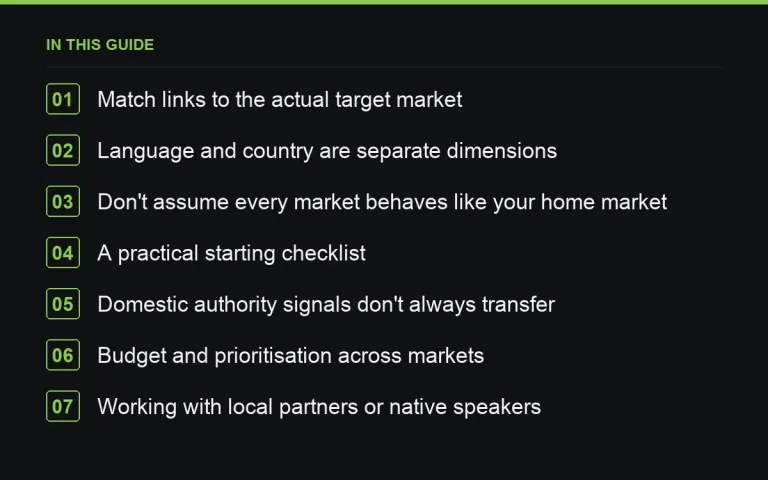
Match links to the actual target market
A link from a general English-language site has limited relevance to a page targeting French-speaking users in France, even if the topic overlaps. Prioritise links from sites that are genuinely read by your target market — in the right language, and ideally with relevant local context — over links that merely exist in large volume in a more familiar market.
Language and country are separate dimensions
A Spanish-language site read primarily in Spain is a different link source than a Spanish-language site read primarily in Mexico or Argentina, even though the language matches. If your targeting is country-specific, filter by both language and, where possible, the site’s actual regional readership, not language alone.
Don’t assume every market behaves like your home market
Outreach norms, typical response times, and even what counts as acceptable disclosure for sponsored content vary by country and publishing culture. What works reliably in one market may need adjusting elsewhere — this is worth learning from local team members or partners rather than assuming universal best practice.
A practical starting checklist
- Identify which specific countries or languages actually matter for your business, rather than trying to cover every possible market at once.
- Use language and niche filters together when sourcing placements — see https://successtoroad.com/marketplace/ for both https://successtoroad.com/language/spanish/-style language filtering and niche filtering combined.
- Localise outreach pitches properly rather than machine-translating a single template.
- Track link building results separately per market, since response rates and typical link quality can differ meaningfully.
Domestic authority signals don’t always transfer
A site with strong authority signals built primarily around one country’s audience doesn’t necessarily carry the same weight for a page targeting a different country, even in the same language. This is closely related to the general point in https://successtoroad.com/blog/relevance-vs-authority-link-building/, applied specifically across borders.
Budget and prioritisation across markets
Rather than spreading a fixed budget evenly across every target market, prioritise based on actual business value — where revenue or growth potential is highest — and treat smaller or newer markets as lower-priority additions once the core markets are well served.
Working with local partners or native speakers
Even with a modest budget, working with someone who genuinely understands the local market — a native-speaking freelancer, a local PR contact, or a partner agency — tends to outperform running the exact same playbook remotely with translated materials alone. Local nuance around what makes a pitch feel genuine, which publications actually carry weight locally versus which merely look impressive from outside, and appropriate tone all benefit from someone with real, current context in that market.
Measuring results per market separately
Keep separate, simple records of link building activity and outcomes for each market you target, rather than a single blended report. Response rates, average link quality, and typical costs can differ substantially between markets, and blending them together obscures which markets are working well and which need a different approach or additional investment.
Where to go next
Read https://successtoroad.com/blog/link-building-uk-market/, https://successtoroad.com/blog/link-building-us-market/ and https://successtoroad.com/blog/international-link-building/ for market-specific guidance, https://successtoroad.com/blog/documenting-links-you-build/ for the per-market tracking habit described above, and https://successtoroad.com/blog/relevance-vs-authority-link-building/ for the underlying relevance principle this all builds on.
Currency, units and cultural references
Beyond language translation, small cultural details matter in international link building outreach and content: using local currency and units where relevant, referencing locally recognisable examples rather than ones specific to your home market, and being aware of regional holidays or events that might affect outreach timing or response rates. These small details signal genuine localisation rather than a superficial translation, which publishers and readers alike tend to notice.
Legal and regulatory differences to be aware of
Advertising disclosure rules, data privacy requirements, and general marketing regulations can differ meaningfully between countries. If your international link building involves paid placements or data collection through gated content, it’s worth confirming what specific disclosure or compliance requirements apply in each target market rather than assuming your home market’s rules apply universally.
Starting small and expanding deliberately
Rather than attempting every target market simultaneously, most successful international link building programmes start with one or two priority markets, learn what works, and expand deliberately from there. This measured approach avoids spreading limited resources too thin across markets you don’t yet understand well enough to execute effectively.
A simple starting exercise: pick your single highest-value target market, identify five realistically relevant publishers there using language and niche filters, and run one small, well-localised outreach batch before deciding whether to expand further into additional markets.
None of this needs to be complicated to get right; the businesses that succeed internationally are usually the ones that resisted the urge to expand everywhere at once and instead did a smaller number of markets properly, learning and adjusting along the way.
Frequently asked questions
Should I use the same outreach template across every country?
No, translate and adapt it — norms around tone, formality and typical response expectations vary by market. A direct machine translation of a template built for one culture often reads oddly in another.
Is a link from a globally read English site useful for a non-English target market?
It can offer some general brand value, but it's less directly relevant than a link from a site genuinely read in that specific target language and country.
How do I find backlink sources for a specific country rather than just a language?
Use combined language and niche filters where available, and look at whether a site's actual readership, not just its language, matches your target country — check its own coverage and audience focus.
Should international link building get the same budget as domestic?
Not necessarily equal budget — prioritise based on the actual business value of each market, treating smaller or newer markets as lower priority until core markets are well established.
Put it into practice
Filter 54,483 websites by DR, traffic, niche and price, and order with escrow — you pay only after the link is live.
Browse the marketplace