Building an Editorial Calendar That Includes Paid Posts
Scheduling paid posts deliberately, rather than slotting them in as they arrive, keeps your site's balance and quality consistent.

Most publishers who accept paid guest posts start by simply publishing them as orders come in. This works until volume increases, at which point sponsored content starts to crowd the schedule unpredictably. A deliberate editorial calendar that plans for paid posts alongside original content solves this before it becomes a problem.
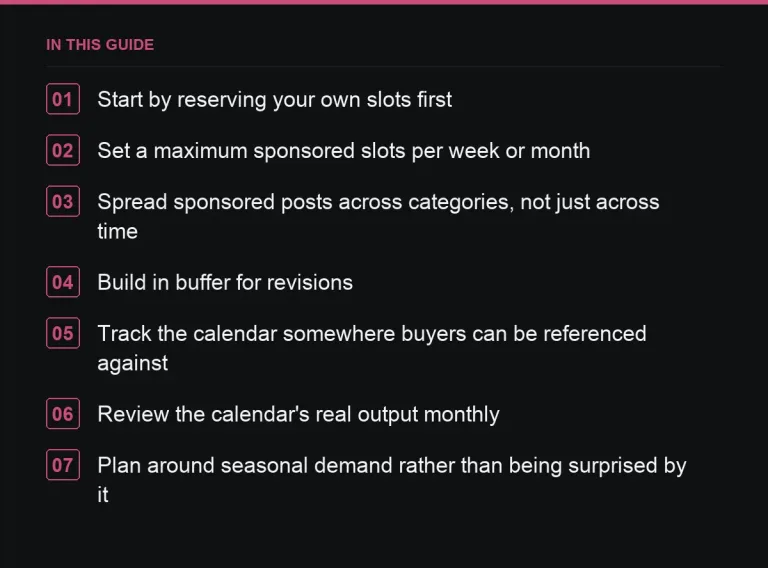
Start by reserving your own slots first
Before you slot in any sponsored content, decide how many staff or unpaid editorial pieces you want published each month, and put those on the calendar first. This protects your organic editorial output from being displaced by whatever paid volume happens to arrive that month, and directly supports your https://successtoroad.com/blog/balancing-sponsored-and-editorial-content/ goals.
Set a maximum sponsored slots per week or month
A cap gives you a concrete answer when deciding whether to accept a new order, rather than relying on gut feeling in the moment. If you are close to capacity, you can tell a buyer their post will run in three weeks rather than accepting it and publishing everything in a rushed cluster. This also feeds directly into the https://successtoroad.com/blog/setting-turnaround-expectations/ you give buyers.
Spread sponsored posts across categories, not just across time
A calendar that avoids clustering in time but still stacks every sponsored post into one category has not solved the underlying balance problem. Track both dimensions: no more than a set number of sponsored posts per week overall, and no more than a set share within any single category, tying back into https://successtoroad.com/blog/maintaining-topical-focus/.
Build in buffer for revisions
Paid posts often need at least one revision round. If your calendar schedules a post for publication the same day a draft is expected, any delay in revision pushes into the live schedule. Build a standard buffer — a few days between expected final draft and scheduled publish date — so a slow revision does not force a rushed final review.
| Calendar element | Purpose |
|---|---|
| Reserved editorial slots | Protects unpaid content from being crowded out |
| Sponsored slot cap per week | Prevents clustering and rushed reviews |
| Category distribution check | Keeps any one topic from being dominated by paid content |
| Revision buffer | Absorbs normal delays without affecting publish dates |
Track the calendar somewhere buyers can be referenced against
A simple shared calendar, even a spreadsheet, lets you tell a buyer honestly whether a slot is available this week or next, rather than guessing. If you manage orders through https://successtoroad.com/marketplace/, keep your internal calendar in sync with the turnaround estimates you give through order messaging so buyers are not quoted a date your schedule cannot actually support.
Review the calendar’s real output monthly
At the end of each month, compare what actually published against what the calendar planned. Consistent gaps in one direction — sponsored posts habitually pushed in ahead of schedule, or reserved editorial slots regularly skipped — tell you where your process is breaking down before it becomes a bigger balance problem.
Plan around seasonal demand rather than being surprised by it
Order volume for paid placements is rarely flat across the year; many publishers see clusters around specific seasonal periods depending on their niche, whether that is https://successtoroad.com/niche/e-commerce/ sites before a peak shopping season or https://successtoroad.com/niche/travelling/ sites ahead of a busy booking period. Building an approximate seasonal pattern into your calendar planning, based on your own historical order data, means a busy month does not force you to abandon your slot caps under pressure.
Share the calendar concept with contributors, not just internally
Regular unpaid contributors benefit from knowing that a calendar exists and that their editorial slot is reserved deliberately, not left to chance. This reassurance keeps good contributors submitting consistently, since they know their work has a planned place in the schedule rather than competing informally against whichever sponsored order arrived most recently.
Keep the calendar simple enough to actually maintain
An elaborate calendar system with more fields and categories than you can realistically keep updated tends to fall out of use within a few months. Start with the minimum that answers your two or three most important questions — how many sponsored slots are filled this month, and is editorial content on track — and only add complexity once the simple version has proven genuinely useful over a full quarter.
Coordinate the calendar with whoever handles buyer communication
If the person managing order messaging is different from whoever maintains the calendar, keep the two tightly linked, since a quoted turnaround that does not match actual slot availability creates the exact kind of mismatch covered in https://successtoroad.com/blog/setting-turnaround-expectations/. A short weekly sync, even five minutes, between these two roles prevents most of this friction before it reaches a buyer.
Leave room for genuinely exceptional content
A rigid calendar should not force you to turn away an exceptional pitch simply because the month’s editorial slots are technically full. Keep a small amount of deliberate flexibility for the rare submission clearly worth bending the schedule for, while still protecting the discipline that makes the calendar useful the rest of the time.
Where to go next
Read https://successtoroad.com/blog/setting-turnaround-expectations/ for how to communicate calendar-driven timelines to buyers, and https://successtoroad.com/blog/the-order-lifecycle-from-the-publishers-side/ for how calendar planning fits into the wider order process.
Frequently asked questions
How many sponsored posts per week is reasonable?
There is no universal number; it depends on your site's overall publishing volume and audience. The important part is setting a deliberate cap rather than accepting orders reactively without limit.
Should editorial and sponsored posts be scheduled on the same calendar?
Yes, a single shared calendar makes it easier to see the real balance between the two and to reserve editorial slots before sponsored orders fill the schedule.
What if a sponsored post's revision runs long and threatens the publish date?
This is exactly what a revision buffer is for. Build a few days of slack into your schedule between expected final draft and publish date so normal delays do not force rushed reviews.
How often should we review whether the calendar plan matches reality?
Monthly is a reasonable cadence. It is frequent enough to catch a recurring pattern, such as sponsored content routinely displacing reserved editorial slots, before it becomes entrenched.
Put it into practice
Filter 54,483 websites by DR, traffic, niche and price, and order with escrow — you pay only after the link is live.
Browse the marketplace