How to Run Responsible Health Digital PR Campaigns
Why health campaigns need a different editorial standard from most digital PR formats, and how to meet it without losing the story.
Health is a category where the cost of getting a campaign wrong is measured in more than a weak coverage report — misleading health claims can cause real harm, and outlets are increasingly cautious about running unverified health content. A responsible approach protects both readers and the campaign’s credibility.
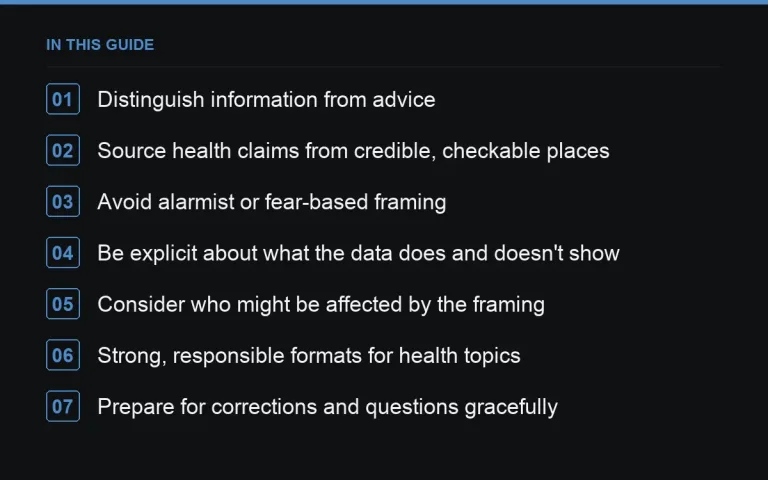
Distinguish information from advice
A campaign presenting general population-level data — prevalence, regional variation, general trend information — is fundamentally different from one implying an individual reader should change their health behaviour based on the data. Keep the framing descriptive, not prescriptive, and avoid any language that reads as personalised medical guidance.
Source health claims from credible, checkable places
Health data needs a higher sourcing bar than most other categories. Prefer recognised public health bodies, peer-reviewed research summaries, or clearly labelled survey data with transparent methodology, following the discipline in https://successtoroad.com/blog/survey-design-pitfalls/. Avoid presenting anecdotal or small-sample findings as if they were general medical fact.
Avoid alarmist or fear-based framing
Headlines implying a health crisis, an epidemic, or an urgent personal risk based on general population data tend to overstate what the underlying figures actually show, and they invite exactly the scrutiny that damages a brand’s credibility long-term. Apply the restraint discussed in https://successtoroad.com/blog/headline-writing-for-campaigns/ particularly strictly here.
Be explicit about what the data does and doesn’t show
State clearly whether a finding shows correlation or something closer to established cause, and avoid implying a causal health relationship your data can’t actually support. A short, honest limitations note in the methodology section is a sign of credibility, not weakness, and outlets increasingly expect it.
Consider who might be affected by the framing
A campaign touching a specific condition, demographic group, or vulnerable population needs extra sensitivity in tone and word choice. Where possible, have someone with relevant subject knowledge review the framing before launch, not just a general editorial read-through.
Strong, responsible formats for health topics
- Regional public health data presented neutrally, per https://successtoroad.com/blog/using-public-datasets-for-pr/ and https://successtoroad.com/blog/map-based-pr-campaigns/.
- General wellbeing survey data, clearly sourced and appropriately caveated.
- Expert commentary from a genuinely qualified source, following https://successtoroad.com/blog/expert-commentary/.
Prepare for corrections and questions gracefully
Health content attracts more reader and expert scrutiny than most other categories, and a genuine question or correction request should be treated as a normal part of publishing in this space, not an attack to defend against. Have a simple, honest process for reviewing a raised concern and updating the page if the concern is valid, and say so transparently if you make a change after publication.
Keep commercial messaging clearly separate
Where a health campaign originates from a brand with a commercial interest in the topic, keep that separation explicit and visible rather than blending brand messaging into the data findings themselves. A reader or journalist who feels the data has been shaped to support a product claim will discount the whole campaign’s credibility, regardless of how solid the underlying sourcing actually is.
Consider signposting support resources where relevant
If the topic touches something readers might find personally distressing, a brief, neutral signpost to general support resources alongside the data can be a genuinely responsible addition, without turning the piece into an advice column. This small addition costs little and reflects well on a brand willing to think beyond the immediate PR goal.
Plan for a slower, more cautious outreach pace
Health desks and editors often take longer to review a pitch than a lighter consumer topic would warrant, since they’re weighing accuracy and potential reader impact more carefully. Build a longer expected response window into your outreach plan for this category, and avoid reading a slow reply as disinterest when it may simply reflect a more thorough editorial process.
Choose spokespeople whose expertise is easy to verify
A journalist covering health content is more likely to check a quoted spokesperson’s credentials than in most other categories. Make sure any named expert’s relevant qualifications and affiliation are accurate, current, and easy to verify quickly, since a credibility question about the spokesperson can derail coverage of an otherwise sound campaign.
Provide a short, factual biography alongside any quote, including relevant qualifications and current role, so a fact-checking journalist can confirm the spokesperson’s standing in minutes rather than having to search for it themselves.
Keep internal records of every claim’s source
Maintain a simple internal reference linking every factual claim in the campaign to its exact source, so that if a challenge or correction request arrives after publication, the team can respond quickly and accurately rather than needing to retrace the research from scratch under pressure.
Where to go next
Plan a conservative https://successtoroad.com/blog/headline-writing-for-campaigns/ and build extra review time into https://successtoroad.com/blog/campaign-timelines/ for this category, and set a longer https://successtoroad.com/blog/measuring-campaign-links-and-coverage/ since cautious outlets often take more time to review health content before publishing. https://successtoroad.com/niche/health/ publishers on https://successtoroad.com/marketplace/ are the natural distribution channel once the campaign has cleared editorial review.
Frequently asked questions
Can a health campaign use survey data from a small sample?
Only with clear caveats about the sample's size and limitations stated prominently, not buried in a footnote. Small-sample health claims presented as general fact are a common and damaging mistake in this category.
Should health campaigns avoid dramatic headlines entirely?
Not entirely, but restraint should be the default. Any dramatic framing needs to be fully supported by the underlying data, with no implication of individual risk or advice the data can't actually support.
Who should review a health campaign before launch?
Ideally someone with relevant subject-matter knowledge, in addition to the usual editorial and, where relevant, legal or compliance review. General marketing sign-off alone is often not sufficient for this category.
Is it fine to link general trends to specific health outcomes?
Only where the data genuinely supports that link and the relationship is described accurately as correlation unless a stronger causal basis is well established and clearly cited.
Put it into practice
Filter 54,483 websites by DR, traffic, niche and price, and order with escrow — you pay only after the link is live.
Browse the marketplace