Link Building for Nature and Outdoor Websites
A guide to link building for nature, wildlife and outdoor recreation websites, including conservation and citizen-science angles.
Nature and outdoors content sits at the intersection of science communication, recreation and conservation, which gives it an unusually wide pool of potential linking publishers — from wildlife charities to hiking blogs to regional tourism boards. The common thread across all of them is a genuine interest in accuracy and a low tolerance for content that oversimplifies or sensationalises.
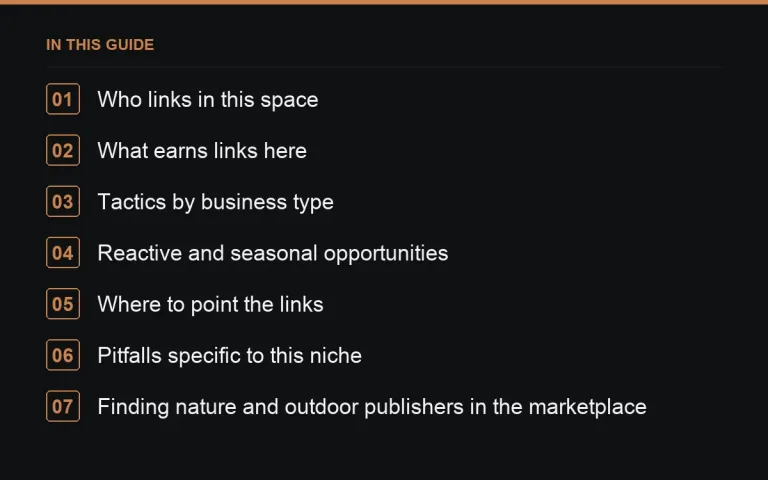
Who links in this space
Expect interest from nature and wildlife blogs, outdoor recreation sites, conservation and environmental organisations, regional tourism and parks authorities, and science communicators covering ecology or biology. Many of these publishers are non-profits or public bodies, which changes the pitch: they respond better to educational value and shared mission than to commercial framing.
What earns links here
- Well-referenced explainers on a specific species, habitat or outdoor skill
- Trail or location guides with practical, accurate detail
- Citizen-science projects or data collection tools the community can use
- Safety and conservation guidance relevant to a specific outdoor activity
- Original photography-adjacent write-ups (described without embedding images) that document a place or species
Field guides and identification content are a particularly durable sub-category here: once a species or habitat guide is established as accurate, other nature writers and even land management agencies tend to cite it for years, since these topics change far more slowly than most content categories. Investing in getting a small number of these guides genuinely right pays off longer than a larger volume of thinner content.
Tactics by business type
| Business type | Best-fit tactic | Notes |
|---|---|---|
| Outdoor gear brand | https://successtoroad.com/blog/testimonial-link-building/ | Field-test units with outdoor bloggers for honest reviews |
| Conservation organisation | https://successtoroad.com/blog/statistics-pages-for-links/ | A clear, well-sourced data page becomes a reference for journalists |
| Tour or guide operator | https://successtoroad.com/blog/local-seo-links/ | Regional tourism sites and local press cover operators directly |
| Nature media or blog | https://successtoroad.com/blog/expert-roundups/ | Contributions from rangers, biologists or guides add credibility |
Reactive and seasonal opportunities
Migration seasons, wildflower blooms, hiking season openings and weather events all generate a wave of seasonal search interest and matching editorial content. Building a relationship with local outdoor and nature journalists ahead of these predictable windows means you’re on their source list when they write the yearly version of the story. Extreme weather or conservation news events are the reactive equivalent — useful if you have a genuine expert able to comment quickly and accurately.
Where to point the links
Direct links to specific guides — a particular trail, species or activity page — rather than a general homepage, since that’s what matches the referring content. For conservation organisations, data or project pages tend to be the most natural and durable link targets.
Photography and field notes shared with proper attribution to the original observer or photographer build goodwill within a community that takes credit and accuracy seriously; skipping this step, even unintentionally, can quickly damage a relationship with contributors and the wider community around a specific location or species.
Pitfalls specific to this niche
Never present speculative or unverified claims as established fact; nature publishers and their readers are often knowledgeable enough to spot it, and it damages the relationship for future pitches. Avoid over-commercialising conservation content, which non-profits and public bodies are quick to reject. And take care with location-specific guides that could encourage overcrowding of sensitive habitats; framing content responsibly protects both the environment and your credibility with these publishers.
Finding nature and outdoor publishers in the marketplace
https://successtoroad.com/niche/nature/ in the marketplace surfaces relevant sites, and cross-referencing with the https://successtoroad.com/compare/ tool helps you weigh a smaller but highly relevant nature blog against a larger general lifestyle site. Given that many of these publishers are mission-driven rather than purely commercial, expect a slower but often more durable placement process.
Working with mission-driven publishers
Many nature and conservation publishers aren’t judging pitches on traffic potential alone; they’re weighing whether working with you supports or undermines their mission. Be upfront about your commercial interest rather than disguising it, and where genuinely relevant, offer something beyond a link — a donation matched to a campaign, volunteer time, or co-authored content that draws on your team’s actual expertise. This kind of reciprocity tends to earn more durable coverage than a straightforward guest-post transaction would with the same organisation.
Expect a slower editorial process than commercial media. Non-profits and public bodies often route content through multiple reviewers before publishing, so build extra time into any campaign timeline involving these publishers, and avoid following up so aggressively that it reads as impatience with a process they can’t speed up.
When working with volunteer-run nature organisations, be flexible about format. Some will only accept a fully written contribution ready to publish as-is, while others prefer a simple factual brief they can rework in their own voice; asking which they’d prefer before drafting anything saves both sides time and produces a better final result.
Where to go next
Pair outreach here with https://successtoroad.com/blog/finding-guest-post-opportunities/ and https://successtoroad.com/blog/topical-relevance/ to prioritise genuinely relevant sites over larger but unrelated ones.
Frequently asked questions
Do conservation non-profits accept sponsored content?
Rarely as clearly labelled advertising, but many will link to genuinely useful resources, tools or data if the content supports their mission rather than just promoting a brand.
How seasonal is nature and outdoors link building?
Very. Plan content and outreach around known seasonal windows — migration, blooming, hiking-season openings — a month or two ahead of peak interest.
What's the risk of location-specific outdoor guides?
Beyond the usual accuracy concerns, overly specific guidance to sensitive or fragile locations can draw criticism. Frame guides responsibly and consider omitting exact coordinates for vulnerable sites.
Are wildlife photography sites a good link source?
Yes, especially for outdoor and nature brands, since many photography-focused nature blogs review gear and discuss locations in detail.
Put it into practice
Filter 54,483 websites by DR, traffic, niche and price, and order with escrow — you pay only after the link is live.
Browse the marketplace