Link Building for Leisure and Hobby Websites
A practical guide to link building for hobby, craft and leisure brands, from enthusiast communities to gear round-ups.

Hobby and leisure sites live inside communities that already talk about the thing they sell or write about: knitting, home brewing, model trains, board games, camping. That makes link building easier than in most industries, because the publishers you want already have a built-in reason to mention you — if the content is genuinely useful to their readers rather than a thinly disguised advert.
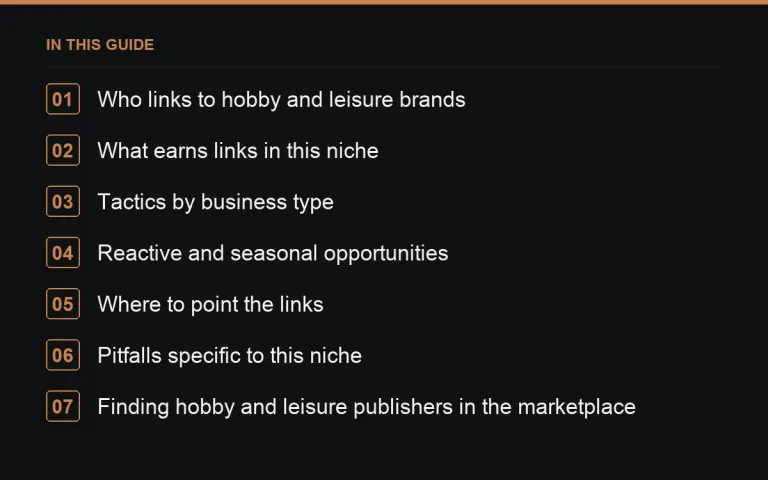
Who links to hobby and leisure brands
The publisher base splits into a few recognisable groups: hobby blogs run by enthusiasts rather than professional editors, gear review sites that publish comparison and “best of” content, community hubs and club sites, local newspapers covering hobby events, and lifestyle magazines doing seasonal gift-guide content. Enthusiast bloggers are often the easiest to reach because they write for love of the topic and respond well to a genuine, specific pitch rather than a templated one.
What earns links in this niche
- Beginner’s guides that solve a real “how do I get started with X” question
- Gear and material comparisons that are honest about trade-offs, not just upsell
- Original how-to content with clear steps and photos of the process (described in text, since this brief avoids images) that a reviewer can reference
- Data or checklists that a hobby blogger can cite instead of writing from scratch
- Interviews with makers, instructors or long-time practitioners
What doesn’t work: generic “top 10 tips” content that reads the same on every hobby site, or pitches that assume the publisher’s audience is a mass market rather than a specific, often quite technical, community.
Tactics by business type
| Business type | Best-fit tactic | Notes |
|---|---|---|
| Craft or hobby supply store | Project tutorials, https://successtoroad.com/blog/resource-page-link-building/ | Supply lists on tutorial pages naturally cite your store |
| Gear manufacturer | Sending review units, https://successtoroad.com/blog/testimonial-link-building/ | Reviewers link back when they cover a product they were given to test |
| Hobby media or magazine | https://successtoroad.com/blog/link-building-for-media-publishers/ | Cross-promotion with adjacent niche publications |
| Local hobby club or shop | https://successtoroad.com/blog/local-seo-links/ | Event listings, local press on club activities |
| Online course or workshop | https://successtoroad.com/blog/webinars-and-events-links/ | Workshop recaps and guest teaching slots |
Reactive and seasonal opportunities
Hobby content is unusually seasonal: gift guides before winter holidays, “getting started” spikes in January, outdoor hobbies peaking in spring and summer, indoor crafts picking up in autumn. Pitch gift-guide inclusion two to three months ahead of the relevant season, since editorial calendars for these round-ups are usually built early. Reactive opportunities also come from hobby-adjacent news — a supply shortage, a new safety standard, or a viral trend in the space — where a quick, well-informed comment can earn a citation from a journalist covering the story.
Where to point the links
Send links from beginner guides and comparison articles to your own how-to content and buying guides, not just the homepage. Category pages for specific hobby types perform well as link targets because they match the intent of someone reading a similar article elsewhere. Avoid sending every link to the same landing page; spread them across the pages that actually answer the linking article’s topic, following the logic in https://successtoroad.com/blog/internal-links-and-backlinks/.
Pitfalls specific to this niche
Enthusiast publishers are quick to spot content that’s been written by someone who doesn’t actually do the hobby. Vague or incorrect terminology kills credibility instantly. It’s also easy to over-rely on a handful of very active hobby bloggers who get pitched constantly; diversify your outreach list rather than repeatedly emailing the same five names. Finally, avoid reciprocal exchanges that stack up too fast within a tight-knit hobby community — see https://successtoroad.com/blog/reciprocal-links/ for where that line sits.
Finding hobby and leisure publishers in the marketplace
In https://successtoroad.com/niche/leisure-and-hobbies/ you can filter by traffic and domain authority to separate personal blogs from higher-reach hobby media, then cross-check with the https://successtoroad.com/compare/ tool before committing budget. Because many hobby sites are run part-time, response times can be slower than in commercial niches, so build extra lead time into your campaign schedule and use saved searches to catch new listings as they’re added.
Building an ongoing relationship instead of a single placement
The strongest hobby link building programmes don’t stop at one guest post. Once a blogger has covered you fairly, keep them updated on new products, seasonal content or events; a second and third mention from the same trusted source compounds far more than chasing a new publisher every time. Offer early access to new gear or content ahead of a public launch, since hobby writers value being first almost as much as commercial reviewers do.
It also helps to contribute back to the community you’re targeting: answering questions in the same forums your target bloggers read, sponsoring a small local meet-up, or simply being visible as a genuine participant rather than only appearing when you want coverage. Publishers notice the difference, and it shows up in how quickly they respond to a pitch the second time around.
Working with escrow and order tracking
When you do move to paid placements on hobby sites through the marketplace, use escrow so funds only release once you’ve confirmed the live URL, and set up the weekly link monitor so you’re alerted if a placement is removed or altered after publication — something that happens more often with smaller, less established hobby sites than with major media.
Where to go next
Pair this guide with https://successtoroad.com/blog/finding-guest-post-opportunities/ for sourcing more publishers, and https://successtoroad.com/blog/topical-relevance/ to understand why a smaller hobby site can outperform a much bigger generic blog for this kind of link.
Frequently asked questions
Do hobby blogs accept paid placements?
Many do, though terms vary widely since most are run by individuals rather than companies. Expect a mix of free coverage in exchange for review units, and paid guest posts on the larger, more established sites.
How seasonal should hobby link building be?
Very. Plan gift-guide and 'new year, new hobby' outreach two to three months ahead, and keep a rolling calendar of seasonal hooks relevant to your specific hobby category.
Is broken link building useful in this space?
Yes, hobby sites change hands or go quiet often, leaving dead links in old tutorials. See {{post:broken-link-building}} for the process of finding and replacing them.
What's the biggest mistake brands make here?
Treating every hobby publisher as one audience. A woodworking blog and a board-game blog have almost nothing in common; pitches need to be specific to the sub-niche, not a generic hobby pitch.
Put it into practice
Filter 54,483 websites by DR, traffic, niche and price, and order with escrow — you pay only after the link is live.
Browse the marketplace