Link Building for Art Galleries and Independent Artists
A guide to earning backlinks for art galleries, independent artists and online art marketplaces.
Art has a genuinely bifurcated publisher landscape: on one side, arts journalism and criticism that covers exhibitions and cultural moments; on the other, commercial art-buying and interior-design content aimed at collectors and casual buyers. Knowing which side you’re targeting changes almost everything about the pitch.
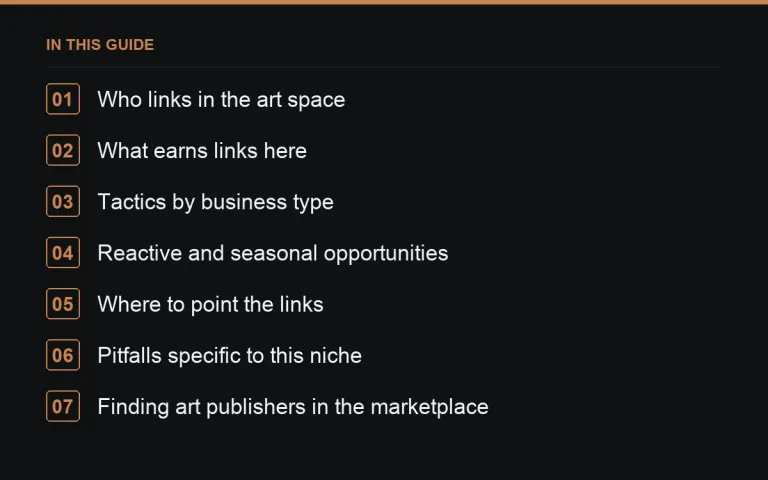
Who links in the art space
Arts and culture journalism, gallery and museum resource pages, interior design and home decor blogs (for buyable art), art education sites, and local press covering exhibitions and open studios are the main publisher groups. Smaller regional arts publications are often more receptive and easier to build a relationship with than national culture desks.
What earns links here
- Exhibition previews and reviews timed to an actual opening
- Artist interviews and process explainers
- Curated collection or “how to start collecting” guides for buyers
- Local arts scene round-ups that mention galleries and open studios
A consistent, well-organised online archive of past exhibitions and works, properly dated and described, becomes a reference resource in its own right over time, which critics and researchers writing about an artist’s development tend to cite directly rather than reconstructing the history themselves.
Tactics by business type
| Business type | Best-fit tactic | Notes |
|---|---|---|
| Independent artist | https://successtoroad.com/blog/link-building-for-media-publishers/ | Local arts press covers individual exhibitions and open studios |
| Gallery | https://successtoroad.com/blog/webinars-and-events-links/ | Opening events and artist talks generate previews and recaps |
| Online art marketplace | https://successtoroad.com/blog/resource-page-link-building/ | “How to buy art online” and collecting guides on design blogs |
| Art education platform | https://successtoroad.com/blog/community-and-forum-links/ | Art student and hobbyist communities cite genuinely useful tutorials |
For emerging or lesser-known artists, framing a pitch around a specific, timely angle — a first solo show, a notable technique, a connection to a current cultural conversation — tends to be far more effective than a general request for coverage of an artist’s work.
Reactive and seasonal opportunities
Exhibition calendars, art fairs and cultural anniversaries are the main predictable hooks; pitch previews several weeks ahead of an opening, not on the day. Interior design content spikes seasonally around home refresh periods, giving art marketplaces a secondary, commercially oriented outreach window distinct from pure arts journalism.
Smaller regional publications often appreciate being given slightly more lead time than larger outlets, since they typically have fewer staff to turn a pitch around quickly; building this into your outreach schedule improves the odds of a considered response rather than a rushed decline.
Where to point the links
Send links to specific artist or collection pages rather than a gallery’s general homepage, matching what the referring article is actually about. For marketplaces, category and curated-collection pages are stronger targets than the site root.
Where budget allows, professionally documenting an exhibition’s opening night, including attendee and press reactions rather than only the artwork itself, gives regional lifestyle and culture publications an additional, more social angle to cover alongside the purely critical one.
Pitfalls specific to this niche
Treating arts journalists like product reviewers is a common mistake — they respond to genuine cultural or critical framing, not commercial pitches. Avoid submitting the same generic press release to both culture desks and design blogs; the framing needs to differ for each audience. And be careful with paid placements in art criticism specifically, since undisclosed commercial content damages trust in a field that prizes independent critical voice; see https://successtoroad.com/blog/google-penalties-and-links/ for the broader risk of unnatural link patterns if this crosses into manipulation.
Finding art publishers in the marketplace
https://successtoroad.com/niche/art/ in the marketplace groups relevant culture and design-adjacent publishers; filter by country to prioritise regional arts press relevant to your gallery or artist’s location, and use saved searches to track new listings in this relatively niche category.
Documenting work for reuse across pitches
Good photographic documentation of an exhibition, an artwork or an artist’s process is one of the most reusable assets in this niche, provided it’s described accurately and with proper context rather than generic marketing captions. The same body of documentation can support a local press pitch, a design blog feature and an artist interview, each framed differently for its specific audience, without needing entirely new material for every pitch.
Keep a running list of every publication that has covered you before, along with what angle they used. When a new exhibition or body of work is ready, revisit that list first; a publisher who has covered you fairly once is usually more receptive to a follow-up pitch than a completely new contact, provided the new work is genuinely newsworthy rather than a repeat of the same story.
Maintaining a simple, well-organised press page with high-resolution images (properly licensed for press use), an accurate artist biography and clear contact details reduces friction for time-pressed arts journalists working to a tight deadline ahead of an opening.
Where to go next
See https://successtoroad.com/blog/finding-guest-post-opportunities/ for broader sourcing and https://successtoroad.com/blog/topical-relevance/ for why a well-matched regional arts blog can outperform a broad culture site with far more traffic.
Frequently asked questions
Should artists pitch national or regional press first?
Regional press is usually more accessible and responsive for individual artists and smaller galleries; national culture desks are worth targeting for significant exhibitions or milestones.
Do interior design blogs count as art marketplace publishers?
Yes, particularly for online art marketplaces selling to buyers furnishing a home rather than serious collectors; their audience and framing differ from arts criticism outlets.
How far ahead should exhibition previews be pitched?
Several weeks before the opening date, since arts editors plan preview coverage on a similar lead time to other cultural event coverage.
Is disclosed sponsored content acceptable in art criticism?
Practices vary by publication; some maintain a strict line between editorial and sponsored content in criticism specifically, so check policy before pitching a paid placement.
Put it into practice
Filter 54,483 websites by DR, traffic, niche and price, and order with escrow — you pay only after the link is live.
Browse the marketplace