How to Pitch Topic Ideas to a Publisher
A workable structure for topic pitches that editors actually respond to.
Most guest post pitches fail before the editor even considers the writing, because the topic itself is wrong for the site. Fixing that one problem solves more rejections than any amount of polishing your prose.
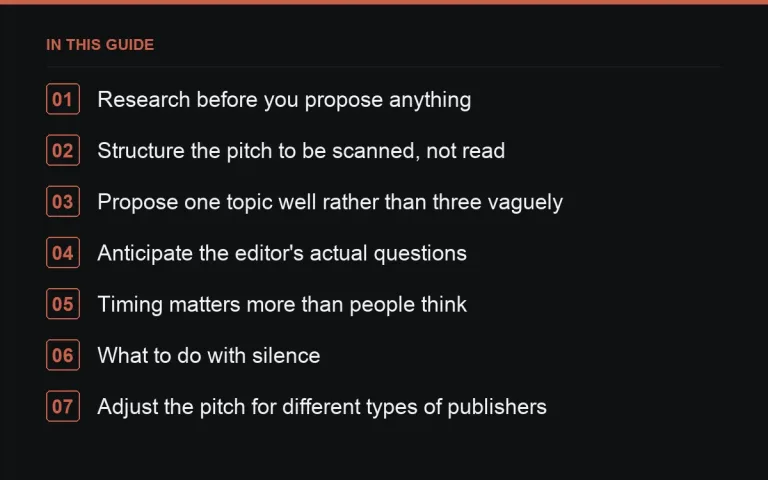
Research before you propose anything
Spend fifteen minutes on the publisher’s site before drafting a pitch: read their about page, skim recent posts, and note any gaps — subjects their audience clearly cares about that haven’t been covered recently. A topic that fills a visible gap is far more compelling than a generic one that could run on any site in the niche.
Structure the pitch to be scanned, not read
Editors triage pitches fast. Lead with the topic in one sentence, follow with three bullet points on what the piece covers, and close with a line on why you’re qualified to write it. Skip the biography paragraph at the top — it delays the part they actually need to evaluate.
A pitch template that holds up
- Subject line: the working title, not “Guest post inquiry”
- Opening line: why this topic, for this site, right now
- Three bullets: the specific angles the piece will cover
- One line: your relevant experience or perspective
- A close: offer to send a full outline if they’d rather see one first
Propose one topic well rather than three vaguely
Sending a list of five loosely defined topic ideas signals you haven’t committed to any of them. One well-researched pitch, with a clear angle and a working title as covered in https://successtoroad.com/blog/guest-post-headlines-that-get-accepted/, reads as more serious and gets a faster answer.
Anticipate the editor’s actual questions
Most editors are silently asking three things as they read: will my readers care, has this been covered already, and can this writer actually deliver it well. Address the first two directly in your pitch and let your writing sample or past bylines answer the third.
Timing matters more than people think
A pitch tied to a seasonal theme sent two weeks before that season starts has a much better shot than the same pitch sent mid-season, when the calendar slot has already been filled. If you know a site publishes around certain themes, time your pitch accordingly rather than sending it whenever you happen to be ready.
What to do with silence
If you haven’t heard back within ten days, one short, polite follow-up is reasonable. A second follow-up rarely helps and can read as pushy. Move on to the next site on your list and keep a simple log so you don’t accidentally re-pitch the same topic to a site that already passed on it.
Adjust the pitch for different types of publishers
The same core structure needs different emphasis depending on the site. A news or media outlet wants a stronger news hook and clear sourcing up front; a niche blog cares more about practical usefulness to its regular readers; a magazine wants to know how the topic fits an upcoming theme. Sending an identical pitch to all three, without adjusting which points you lead with, is a common reason a strong topic still gets passed over.
What a strong topic pitch is really demonstrating
Beyond the topic itself, a good pitch quietly demonstrates that you understand the publisher’s audience, that you can write clearly and concisely, and that you’re professional enough to be low-risk to work with. Editors read pitches with all three of these questions running in the background, even when the email itself is only about the topic.
When a publisher asks for an outline instead of a full pitch decision
Some editors respond to a topic pitch by asking for a short outline before committing. Treat this as a genuine intermediate step, not a formality — a rushed, thin outline at this stage can undo the goodwill your original pitch built. Give it the same care you gave the pitch itself: clear section headers, the core argument for each, and where your link would naturally sit.
Pitching multiple sites without it becoming spammy
You can reasonably pitch several sites at once as long as each pitch is genuinely tailored rather than a copy-paste job with the site name swapped in. If two sites you’re pitching are close competitors covering the same narrow audience, be thoughtful about topic overlap — proposing near-identical topics to direct competitors can create an awkward situation if both accept, and it’s simpler to avoid than to untangle afterward.
What a rejection actually tells you, and what it doesn’t
A pass on a topic pitch is rarely a verdict on your writing ability, since the editor hasn’t seen a draft yet. Most rejections at the pitch stage come down to timing, fit, or a recently covered similar angle — reasons that say very little about you personally and a lot about that specific site’s current situation. Keep this in mind so a string of pitch-stage rejections doesn’t erode confidence that a stronger match would quickly restore.
Where to go next
Once a topic gets a yes, the real work of matching structure to audience begins — see https://successtoroad.com/blog/guest-post-structure-that-keeps-readers/ for that. If you’re pitching across several verticals at once, browsing https://successtoroad.com/marketplace/ by niche first can help you match topic ideas to sites before you write a single pitch email, and https://successtoroad.com/blog/guest-posting-for-beginners/ covers the wider process if this is new territory for you.
Frequently asked questions
How many topic ideas should I include in one pitch email?
One, developed well, beats three vague ones. If you genuinely have strong ideas for multiple sites, send separate, tailored pitches rather than a single email listing several options.
Should I attach a full draft with my topic pitch?
No. Most editors prefer to approve the topic and angle first. Writing the full piece before getting a yes risks wasted effort if the topic needs to change.
What if the publisher already covered a similar topic recently?
Check their archive before pitching. If a similar piece ran in the last few months, either propose a genuinely different angle or choose a different topic entirely.
Is it worth pitching a topic outside the site's usual categories?
Only if you can clearly explain why their audience would care. Without that context, an off-topic pitch usually gets an instant pass regardless of writing quality.
Put it into practice
Filter 54,483 websites by DR, traffic, niche and price, and order with escrow — you pay only after the link is live.
Browse the marketplace