Guest Posting in Regulated Industries: Finance, Health, and Legal
What to keep in mind when guest posting touches regulated topics like finance, health, or law.
Guest posting in finance, health, and legal niches carries extra responsibility that generic marketing content doesn’t. This isn’t legal advice, and rules vary by jurisdiction and industry — but a few general considerations are worth keeping in mind whether you’re pitching or evaluating a pitch in these areas.
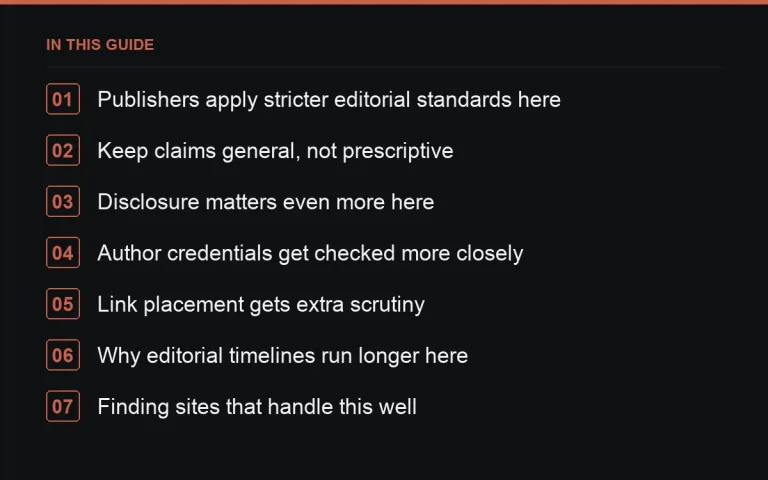
Publishers apply stricter editorial standards here
Reputable sites in these niches are generally more cautious about contributed content because the cost of publishing something inaccurate or misleading is higher — both reputationally and, in some cases, legally. Expect more scrutiny of claims, more requests for sourcing, and less tolerance for promotional framing than you’d encounter pitching a general lifestyle blog.
Keep claims general, not prescriptive
A guest post explaining general concepts in personal finance, wellness, or common legal processes is very different from one that reads as specific advice tailored to an individual reader’s situation. The former is standard educational content; the latter risks crossing into advice that should come from a licensed professional addressing someone’s specific circumstances. When in doubt, frame content as general information and suggest readers consult a qualified professional for their specific situation.
General considerations across these niches
- Avoid specific product recommendations dressed up as neutral advice
- Don’t present opinion or general guidance as guaranteed outcomes
- Disclose any commercial relationship clearly, especially where required by industry norms
- Cite general, defensible statements rather than specific statistics you can’t verify
- Expect a longer, more careful editorial review process than in less regulated niches
Disclosure matters even more here
If a guest post touches on financial products, health claims, or legal services and there’s any commercial relationship involved — even an indirect one through a marketplace placement — clear disclosure is especially important in these niches given how directly the content can affect a reader’s real decisions. https://successtoroad.com/blog/guest-post-disclosure-rules/ covers the general principles, which apply with extra weight here.
Author credentials get checked more closely
Publishers in these spaces are more likely to verify claimed expertise before accepting a byline, particularly for anything resembling advice rather than general commentary. Be straightforward about your actual background rather than overstating credentials to get a pitch accepted — this is both an ethical matter and a practical one, since it’s more likely to be checked here than elsewhere.
Link placement gets extra scrutiny
A link to a financial product, health service, or legal practice within contributed content is scrutinised more heavily than a link in a general lifestyle piece, precisely because readers may act on it in ways that matter more. Keep link placement clearly contextual and be prepared for publishers to ask more questions about it than you’d encounter elsewhere.
Why editorial timelines run longer here
Beyond the standard review a piece would get on a general blog, regulated-niche publishers often add a fact-checking or compliance-adjacent pass before publication, which extends the usual timeline. Build extra slack into any deadline for a placement in these niches, on top of the general guidance in https://successtoroad.com/blog/guest-post-slas-and-delivery-times/, rather than assuming the same pace as a lifestyle or general-interest site.
Finding sites that handle this well
When browsing candidates on https://successtoroad.com/marketplace/ within https://successtoroad.com/niche/finance/, https://successtoroad.com/niche/health/, or https://successtoroad.com/niche/law/, look for signs of real editorial rigor beyond the traffic and authority numbers — a visible editorial policy, bylines with genuine credentials, and existing content that already reflects the careful, general-guidance tone described above. A site that already handles this well is a much easier, lower-risk pitch than one that doesn’t seem to have thought about it at all.
What to do if you’re unsure whether a claim crosses a line
When in doubt about whether a statement reads as general education or specific advice, err on the side of the more cautious framing and add an explicit note suggesting the reader consult a relevant professional for their situation. This costs little in terms of the piece’s usefulness and meaningfully reduces the risk of the content being read as something it wasn’t intended to be.
Working with a compliance-minded reviewer where relevant
If you’re regularly producing content in these niches on behalf of a company or client with an actual compliance function, it’s worth routing sensitive pieces through that review before submission, even for something as ordinary-seeming as a guest post. This is a small extra step that catches issues a marketing-focused writer might not think to flag on their own, and it’s far cheaper to fix at this stage than after a piece is already live and attracting attention from readers or regulators alike, however unlikely that outcome might seem at the time.
Where to go next
If you’re a consultant or advisor operating in one of these spaces, https://successtoroad.com/blog/guest-posts-for-consultants/ covers the related question of demonstrating expertise without overstepping into individualised advice. And when evaluating sites in these niches specifically, apply the general vetting framework in https://successtoroad.com/blog/how-to-evaluate-a-guest-post-site/ with extra weight on editorial rigor and disclosure practices.
Frequently asked questions
Is guest posting in finance, health, or legal niches inherently riskier?
It carries more responsibility due to potential impact on reader decisions, but it isn't inherently prohibited. Extra care around claims, disclosure, and sourcing addresses most of the added risk.
Do I need professional credentials to guest post in these niches?
Not always, but publishers tend to check claimed expertise more closely here. Be honest about your actual background rather than overstating qualifications to get a pitch accepted.
Should I avoid specific advice entirely in regulated-niche guest posts?
General educational content is safer than advice tailored to an individual's specific situation. When in doubt, frame content as general information and suggest professional consultation for personal circumstances.
Does disclosure matter more in these niches than in general blogging?
Generally yes, given how directly the content can influence real financial, health, or legal decisions. Clear, upfront disclosure of any commercial relationship is especially important here.
Put it into practice
Filter 54,483 websites by DR, traffic, niche and price, and order with escrow — you pay only after the link is live.
Browse the marketplace