Guest Posting on Greek Websites
A market-specific guide to guest posting on Greek sites, including seasonal content patterns and strong niches.
Greece is a small language market by population but a dense one online, with a media scene split between Athens-based national outlets and a large number of regional and island-specific sites serving tourism-heavy local economies. If your brand touches travel, hospitality, shipping or real estate, Greek publishers are worth more attention than the country’s size might suggest.
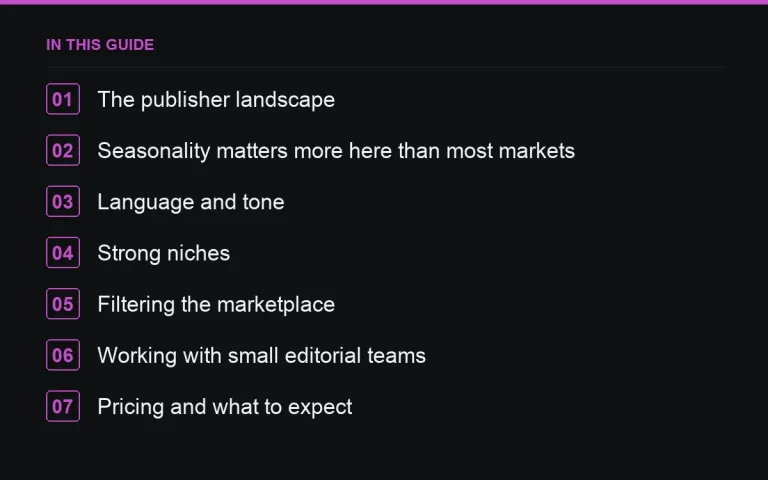
The publisher landscape
National news and lifestyle portals dominate general traffic, but a lot of genuinely useful authority sits in vertical blogs: travel sites covering specific islands or regions, shipping and logistics trade publications (a genuinely large industry in Greece), and finance blogs aimed at a population that reads a great deal about property and banking. Editorial teams are often small, so response times can lag compared to bigger Western European markets — a follow-up after a week or two is normal, not pushy.
Seasonality matters more here than most markets
Greek publishing has a strong seasonal rhythm tied to tourism. Travel and hospitality content published in late winter and spring, ahead of the summer season, gets far more editorial attention than the same pitch in August, when much of the country’s working population is on holiday and editorial output slows. Plan campaigns around this rather than fighting it.
Language and tone
Greek readers are comfortable with longer-form, formal writing, and direct translation from English often reads stiffly — a native Greek copywriter or a translator experienced in marketing content, not just literal translation, makes a real difference in acceptance rates. English-language content is accepted on some international-facing tourism and shipping sites, since those industries deal with an international audience daily, but general lifestyle and news sites expect Greek.
Strong niches
- Travel and tourism, especially island- and region-specific sites.
- Shipping, logistics and maritime trade publications.
- Real estate and property investment, a heavily discussed topic domestically.
- Food and lifestyle blogs with strong regional identity.
Filtering the marketplace
Use https://successtoroad.com/language/greek/ to isolate Greek-language publishers, and pair it with the https://successtoroad.com/niche/travelling/ or https://successtoroad.com/niche/real-estate/ filters depending on your campaign. If you’re placing across several Mediterranean or Southern European markets at once, the https://successtoroad.com/compare/ tool helps you weigh Greek sites against similarly priced options elsewhere without losing track of metrics.
Working with small editorial teams
Many Greek outlets, especially regional and island-specific sites, are run by very small teams, sometimes a single editor alongside freelance contributors. This means a personal, specific pitch referencing the site’s actual content performs far better than a templated mass email, and it also means editorial decisions can take longer simply because one person is juggling several roles.
Pricing and what to expect
Pricing generally sits in the middle of the European range, with national portals commanding a premium over smaller regional and vertical blogs. Shipping and maritime trade publications, given their specialised B2B audience, sometimes price higher than their general traffic figures alone would suggest — a reflection of how valuable that specific readership is rather than an inflated rate.
Combining national and regional placements
A well-balanced Greek campaign typically pairs a small number of national portal placements, which carry broad authority, with a larger set of regional and vertical placements that carry more specific relevance. This mix tends to outperform relying on national media alone, particularly for niches like travel or real estate where regional trust matters as much as raw traffic.
Keep an eye on how content performs after publication where you can — engagement on regional sites, even with smaller absolute numbers, is often a better signal of genuine local relevance than a larger but less engaged audience on a national outlet.
A note on visual and structural expectations
Even though images aren’t part of the guest post itself, Greek readers are used to well-structured articles with clear subheadings and short paragraphs, particularly on mobile, where a large share of traffic to travel and lifestyle sites originates. Structuring your draft with this in mind before submission tends to reduce the amount of editorial rework a publisher asks for.
Combining Greek placements with wider Mediterranean campaigns
Brands running a broader Southern European push often pair Greek placements with Italian or Spanish ones in the same reporting cycle, since seasonal patterns for travel content overlap closely across these markets. Coordinating publication timing across all three ahead of the summer season, rather than treating each market’s calendar independently, tends to produce a more coherent overall campaign and makes it easier to compare results across the region on the same timeline.
Handling multi-year tourism content plans
Because tourism content has such a strong seasonal rhythm here, it’s worth planning at least a year ahead rather than reacting to the calendar quarter by quarter. Mapping out which islands, regions or travel themes to pitch and when, well before the spring editorial window opens, gives publishers time to slot your content into their own seasonal planning rather than competing for a late, crowded slot.
Where to go next
For a broader Southern/Eastern European view, see https://successtoroad.com/blog/eastern-europe-link-building-overview/ and https://successtoroad.com/blog/nordic-markets-link-building-overview/ for contrast with a very different regional pattern. Our https://successtoroad.com/blog/international-link-building/ guide covers the operational basics, https://successtoroad.com/blog/translating-vs-native-content-guest-posts/ is directly relevant given the translation quality point above, and https://successtoroad.com/blog/cultural-norms-publisher-negotiations/ will help you set realistic expectations on response times.
Frequently asked questions
Do Greek publishers accept English-language content?
Some international-facing travel and shipping sites do, but most general news and lifestyle publishers expect Greek, ideally written natively rather than translated word for word.
When is the best time to pitch travel content?
Late winter through spring, ahead of the summer tourist season, gets far more editorial attention than pitches sent during the August slowdown.
Are Greek publisher response times slower than Western Europe?
Often yes, particularly at smaller regional and vertical outlets with lean editorial teams. Budget extra time and follow up politely rather than assuming disinterest.
What niches perform best in the Greek market?
Travel, shipping and maritime trade, real estate, and regional food and lifestyle content all have strong, engaged publisher communities.
Put it into practice
Filter 54,483 websites by DR, traffic, niche and price, and order with escrow — you pay only after the link is live.
Browse the marketplace