Writing Guest Post Headlines Editors Actually Accept
The headline patterns that make editors say yes instead of ignoring your pitch.
An editor scanning a pitch inbox decides whether to keep reading within the first line. That line is almost always your proposed headline, which means it’s doing more selling than the rest of your pitch combined. Get it wrong and nothing else in the email matters.
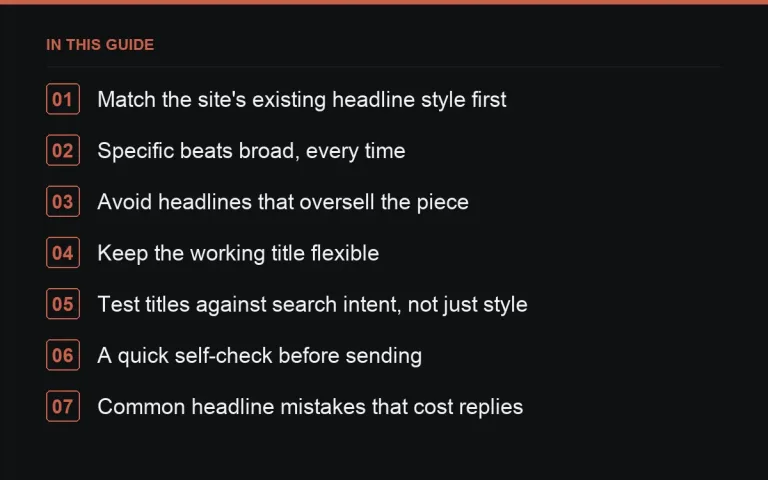
Match the site’s existing headline style first
Before you write anything, scroll the publisher’s last twenty posts and note the pattern: do they use numbered lists, direct how-to phrasing, or more editorial, opinion-led titles? A headline that fits the surrounding content signals you’ve done your homework, which matters more to most editors than cleverness. This is a step people skip when they’re moving fast through https://successtoroad.com/blog/pitching-topic-ideas-to-a-publisher/, and it shows.
Specific beats broad, every time
“How to Improve Your Marketing” tells an editor nothing about what makes your piece different from the fifty other pitches making the same promise. “How a Three-Person Agency Cut Onboarding Time in Half” — even without invented numbers if you’re using a real example — gives them something concrete to picture running on their site.
Headline patterns that tend to work
- A specific problem plus a specific audience: “Email Deliverability for Small SaaS Teams”
- A comparison the reader is already weighing: “Guest Posts vs Niche Edits: Which to Buy and When”
- A number tied to something real, not invented: “12 Red Flags That a Guest Post Site Is a Link Farm”
- A direct question readers search for: “How Long Should a Guest Post Be?”
Avoid headlines that oversell the piece
Editors have seen every superlative. “The Ultimate Guide” and “Everything You Need to Know” read as filler because they usually are. A precise, modest headline that delivers exactly what it promises earns more trust than a dramatic one that doesn’t match the actual depth of the piece.
Keep the working title flexible
Submit your headline as a working title, not a final one, and say so explicitly. Editors often have a house style for titles and will rewrite yours regardless of how good it is — treating it as fixed instead of a starting point can make routine edits feel like a fight you didn’t need to have.
Test titles against search intent, not just style
If part of your goal is for the piece to rank on the publisher’s site, the headline should reflect how people actually search, not just read well. https://successtoroad.com/blog/guest-posts-that-rank-on-their-own/ goes into how topic and headline choice affects a post’s ability to earn organic traffic after it’s live, which is worth factoring in before you finalise anything.
A quick self-check before sending
| Question | Why it matters |
|---|---|
| Does this match the site’s usual tone? | Mismatched tone is an instant pass for many editors |
| Is it specific enough to picture the article? | Vague titles suggest a vague piece |
| Would I click this if I weren’t the author? | Honest self-assessment catches overselling |
| Have I avoided clickbait phrasing? | Most quality publishers reject it outright |
Common headline mistakes that cost replies
Beyond overselling, a few recurring mistakes quietly sink otherwise decent pitches: burying the actual subject behind a clever turn of phrase the editor has to decode, using internal jargon from your own company that means nothing to an outside reader, and writing a headline so long it reads as a run-on sentence rather than a title. Each of these is an easy fix once you spot it, but they’re hard to catch in your own writing without a deliberate check.
A short list of headline habits to drop
- Front-loading a pun or wordplay before the actual topic is clear
- Using company-specific terms a general reader wouldn’t recognise
- Stacking two ideas into one headline instead of picking the stronger one
- Ending with a vague teaser like “…and more” that adds no information
Why the subject line and headline should usually match
Some writers use a generic subject line like “Guest post pitch” and save their best headline for the body of the email, assuming the editor will read that far. Many won’t. Put your actual working title in the subject line itself so it’s the very first thing an editor sees when scanning an inbox, which is exactly the moment your headline needs to do its job.
Testing a headline against yourself before sending
A useful trick: write two or three alternative headlines for the same topic and read them back to back a day later, once you’ve lost the attachment that comes from just having written them. The one that still feels clear and specific after some distance is usually the stronger choice. This small delay catches a surprising number of headlines that seemed clever in the moment but read as vague or overwrought on a second look.
How headline quality reflects on the rest of the pitch
Editors reasonably infer something about the quality of your thinking from how carefully you’ve considered the headline. A pitch with a sharp, specific headline signals that you’ve done the work of clarifying your own argument before writing a word of the piece, which is exactly the kind of discipline that produces a strong final draft.
Where to go next
Once your headline earns a reply, the structure of the piece itself needs to keep the promise it made. https://successtoroad.com/blog/guest-post-structure-that-keeps-readers/ picks up from here, and if you’re pitching several sites at once, browsing https://successtoroad.com/marketplace/ candidates by niche can help you match topic to headline before you write a word of the draft.
Frequently asked questions
Should I write the final headline before pitching or after acceptance?
Write a strong working title for the pitch, but expect it to change. Many publishers apply their own house style to titles regardless of how the piece was originally proposed.
Do numbered list headlines still work for guest post pitches?
Yes, when the number is real and the list delivers on it. Editors are wary of numbers that feel padded to hit a round figure rather than reflecting genuinely distinct points.
How long should a guest post headline be?
Most publishers prefer headlines under about 70 characters so they display cleanly in search results and on the site's own listing pages. Longer titles tend to get trimmed anyway.
What's a fast way to learn a publisher's headline style?
Read their last fifteen to twenty published titles and note shared patterns in length, punctuation, and whether they lean toward questions, lists, or direct statements.
Put it into practice
Filter 54,483 websites by DR, traffic, niche and price, and order with escrow — you pay only after the link is live.
Browse the marketplace