Pitching Editors of Big Publications
How pitching a major publication differs from pitching a smaller blog, and how to realistically improve your odds.
Large, well-known publications receive far more pitches than they can use, and their editorial bar, and their scepticism toward unsolicited pitches, is correspondingly higher. This post covers what realistically changes when your target is a major outlet rather than an independent blog.
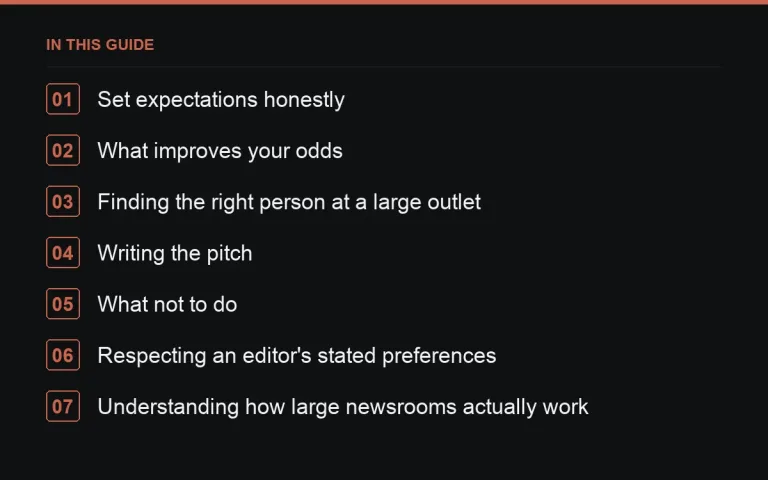
Set expectations honestly
Editors at large publications reject the overwhelming majority of unsolicited pitches, and a low response rate from this channel is normal, not a sign your approach is fundamentally broken. Treat pitches to major outlets as a long-odds, high-value channel, worth pursuing selectively rather than as the bulk of a campaign.
What improves your odds
- A genuinely newsworthy hook, not just a well-written pitch about something not actually newsworthy.
- Familiarity with the specific section and writer’s recent coverage, so the pitch clearly fits their actual beat.
- Exclusivity, offering a story, data point or interview to one outlet first, rather than a mass pitch sent identically to many outlets at once.
- A track record, previous coverage or a credible platform that establishes you as a legitimate source before the pitch even lands.
Finding the right person at a large outlet
Large publications often have section-specific editors and many contributing or staff writers; a pitch to a generic newsroom address is close to certain to be ignored. Apply the same method as https://successtoroad.com/blog/outreach-finding-the-right-contact/, but expect it to take longer, since large mastheads have more staff and less publicly listed contact information than an independent blog.
Writing the pitch
Keep it shorter than you would for a smaller blog, major-outlet editors and writers receive very high pitch volumes and decide even faster. Lead with the news value in the first sentence; do not build up to it. If you have exclusive access, data, or an interview subject, say so explicitly, since it is often the deciding factor.
What not to do
- Do not mass-pitch identical copy to multiple writers at the same large publication simultaneously; it is easily noticed and reads as spam.
- Do not follow up more than once; large-outlet contacts have less patience for repeated cold contact than smaller, more personally-run sites.
- Do not offer payment for coverage; this is against editorial standards at reputable outlets and will damage your credibility if raised.
Respecting an editor’s stated preferences
Many large outlets publish explicit pitching guidelines, preferred contact method, what they do and do not cover, how far in advance to pitch seasonal content. Following these precisely, rather than defaulting to a generic approach because it worked elsewhere, signals genuine professionalism and removes an easy reason for an editor to dismiss a pitch before reading it properly.
Understanding how large newsrooms actually work
Large publications typically separate news, features, and opinion desks, each with different editors, different submission expectations, and different timelines. Pitching the wrong desk for your specific story, a feature idea sent to a breaking-news editor, for instance, wastes the small window of attention you have, so confirm which desk actually covers content like yours before spending effort on a tailored pitch.
Building credibility before you pitch a major outlet
Editors and writers at large publications are more receptive to a pitch from someone who already has some visible, verifiable track record, prior coverage elsewhere, a genuinely substantial platform, recognised expertise, than from an entirely unknown sender with no context. If you do not yet have that track record, it is often more productive to build it first through smaller, mid-tier placements and expert-comment opportunities, and treat major-outlet pitching as a goal to work toward rather than a starting point.
What happens if you do land a major placement
A single placement in a well-known publication can itself become the credibility marker that makes future pitches, to that outlet or others, considerably easier. Reference it briefly and factually in future pitches rather than over-emphasising it; a single line noting where you have previously been featured is usually enough to establish credibility without the pitch reading as boastful.
A realistic campaign structure
| Tier | Approach |
|---|---|
| A handful of top-tier targets | Highly tailored, exclusive pitches, low volume, high effort each. |
| Mid-tier and niche publications | Standard journalist or blogger pitch structure, moderate volume. |
| Broader blogger and marketplace links | Higher volume, templated-with-slots approach or marketplace placements. |
See https://successtoroad.com/blog/journalists-vs-bloggers-outreach-differences/ for the mid-tier approach, and https://successtoroad.com/niche/news-and-media/ on https://successtoroad.com/marketplace/ for a complementary channel at the broader tier.
Being patient with a long sales cycle
Even a strong pitch to a major outlet can take weeks to receive any response at all, given the volume such contacts typically manage. Plan your broader campaign timeline around this reality rather than treating a top-tier pitch as something that will resolve on the same schedule as a smaller blog outreach effort, and keep pursuing mid-tier and marketplace opportunities in parallel rather than waiting on a single major-outlet outcome before moving forward.
Where to go next
See https://successtoroad.com/blog/pitching-data-and-original-research/ and https://successtoroad.com/blog/pitching-expert-comment-and-quotes/ for the pitch types most likely to land with large-outlet editors specifically. For the overall process, see https://successtoroad.com/blog/link-outreach-guide/.
Frequently asked questions
Is it worth the time to pitch major publications at all?
Selectively, yes, for genuinely newsworthy stories or data; treat it as a low-volume, high-effort part of a wider campaign rather than the main channel.
Should I offer exclusivity to a major outlet?
Yes, if you genuinely can; exclusivity is one of the stronger factors that improves odds with large publications specifically.
How many major outlets should I pitch with the same story?
One at a time if offering exclusivity; simultaneous identical pitches to competing major outlets are easily noticed and can backfire.
What if a major outlet writer never replies at all?
This is common; move on after a single brief follow-up rather than escalating further, and keep the relationship door open for a future, better-fitting pitch.
Put it into practice
Filter 54,483 websites by DR, traffic, niche and price, and order with escrow — you pay only after the link is live.
Browse the marketplace